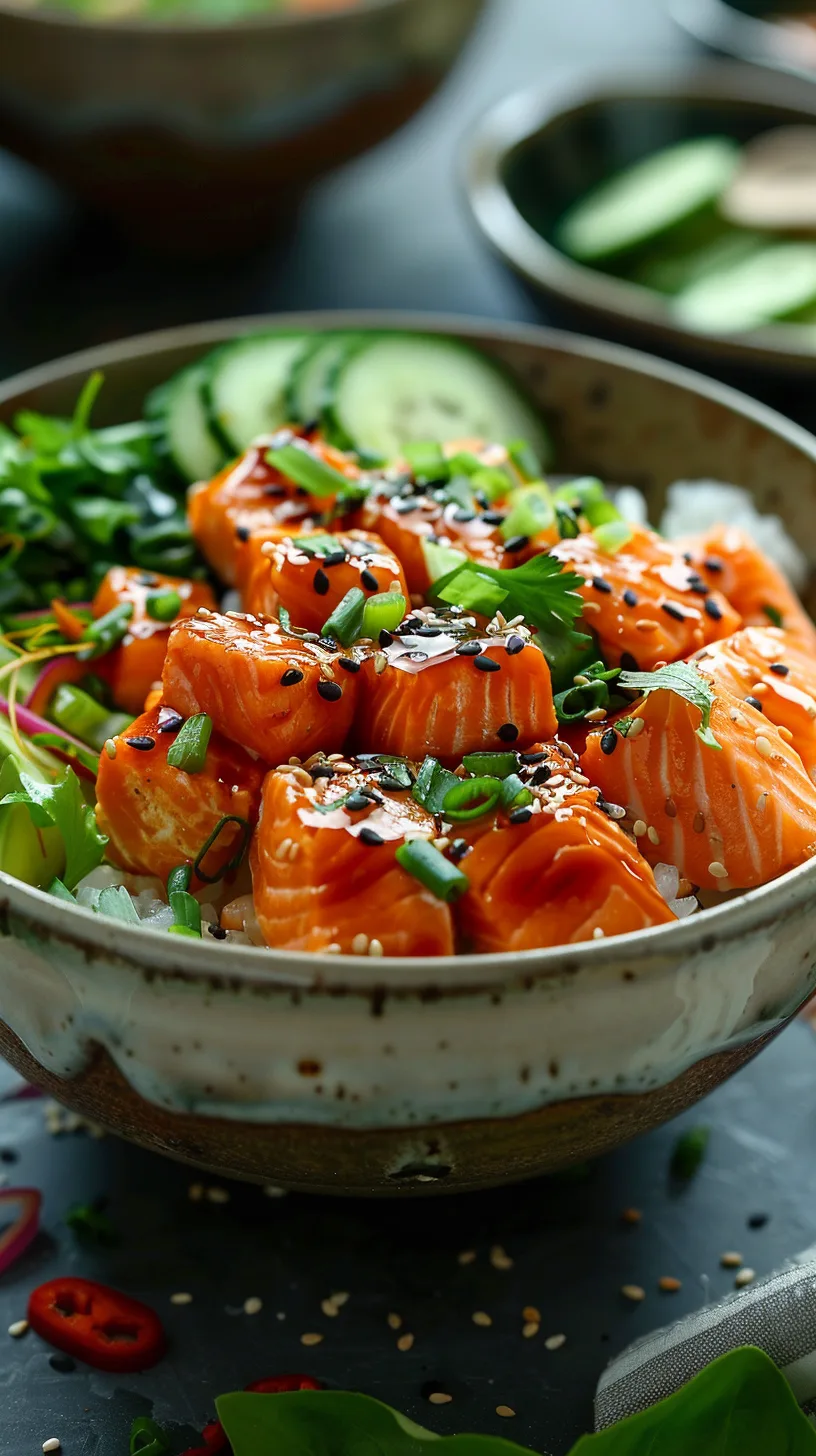
Spicy Salmon Sushi Bowls are a vibrant deconstructed sushi experience featuring pan-seared salmon glazed in a savory blend of Japanese teriyaki and Korean chili paste. This nutritious meal provides the complex flavors of a premium sushi roll in a bowl format that is accessible for any home cook. By combining warm rice with cold vegetables and spicy salmon, you achieve a balanced dish that satisfies cravings for fresh seafood and bold umami notes. This recipe is designed to be a quick weeknight dinner that does not compromise on quality or presentation.
| Prep Time | Cook Time | Total Time | Servings | Difficulty | Cuisine | Category | Calories |
|---|---|---|---|---|---|---|---|
| 15 mins | 8 mins | 23 mins | 1 | Easy | Fusion | Main Course | 680 kcal |
Why This Recipe Works
Spicy Salmon Sushi Bowls work because they offer a sophisticated interplay of temperatures and textures that mimic the sensation of high-end dining. The combination of the warm, seared salmon against the chilled avocado and crisp red onion creates a dynamic eating experience. I find that using gochujang alongside teriyaki sauce provides a deep, fermented heat that ordinary hot sauces cannot replicate. The richness of the salmon is perfectly countered by the acidity of the marinated sauce and the earthiness of the sprouts.
This recipe is incredibly efficient for busy professionals or health-conscious individuals in the U.S. who want a protein-packed meal without the hassle of rolling sushi. Using a single 200g salmon fillet makes it a perfect portion for one person, though it is easily scalable for families. The addition of Kewpie mayonnaise and crispy nori allows you to customize the richness and crunch of every bite according to your personal preference. It effectively bridges the gap between a casual grain bowl and a complex seafood entree.
Ingredients
| Ingredient | Quantity | Purpose | Substitutions |
|---|---|---|---|
| Salmon Fillet | 200g | Primary protein source | Steelhead trout or firm tofu |
| Teriyaki Sauce | 3 tbsp | Sweet and savory glazing agent | Soy sauce mixed with honey |
| Gochujang Paste | 2 tbsp | Adds depth and fermented spice | Sriracha mixed with miso |
| Cooked Rice | 1 cup | Filling carbohydrate base | Quinoa or cauliflower rice |
| Avocado | ½ | Provides creamy texture and healthy fats | Cucumber for a crunchier profile |
| Red Onion | ¼ small | Adds sharp bite and color | Shallots or green onions |
| Kewpie Mayonnaise | As desired | Creamy, umami finishing sauce | Plain Greek yogurt with lemon |
Step-by-Step Instructions
Preparing the Spicy Glaze
- Place the 200g salmon fillet in a medium mixing bowl to prepare for seasoning.
- Add the three tablespoons of teriyaki sauce and two tablespoons of gochujang paste directly over the fish.
- Mix the ingredients thoroughly until every side of the salmon is coated in the thick, spicy sauce.
Searing the Salmon
- Heat two teaspoons of vegetable oil in a non-stick frying pan over medium-high heat until the oil shimmers.
- Add the coated salmon fillet to the hot pan carefully to avoid splashing.
- Cook the salmon for approximately 3 to 4 minutes on each side to develop a caramelized crust.
- Remove the salmon once it reaches your desired level of doneness and shows a visible golden sear.
Assembling the Sushi Bowl
- Divide the cooked rice into your serving bowl to serve as the foundation of the dish.
- Arrange the diced avocado, thinly sliced red onion, and fresh sprouts around the perimeter of the rice.
- Place the warm, seared salmon fillet directly on top of the rice and vegetable arrangement.
- Drizzle the top with Kewpie mayonnaise and your choice of hot sauce for additional flavor.
- Add a small dollop of wasabi to the side if you prefer an extra nasal heat.
- Scoop the mixture into crispy nori squares during the meal to enjoy a crunchy, handheld experience.
Chef Tips for Perfect Results
- Ensure the salmon is patted dry with a paper towel before adding the sauce to help the glaze stick better.
- Use a high-quality non-stick pan to prevent the sugars in the teriyaki sauce from burning or sticking to the surface.
- Allow the cooked rice to cool slightly before adding the avocado to prevent the fruit from turning mushy.
- Slice the red onion as thinly as possible to ensure the flavor is subtle rather than overpowering.
- Search for center-cut salmon fillets as they have a consistent thickness which ensures even cooking throughout the piece.
Common Mistakes to Avoid
Overcooking the salmon is the most common error that leads to a dry and chalky texture in the bowl. Always aim for an internal temperature of about 125 degrees Fahrenheit for a moist, medium-rare finish that flakes easily. If the fish feels firm and stiff, it has likely been on the heat too long. You should monitor the thickness of your fillet and adjust the timing accordingly.
Crowding the pan with too many ingredients at once will lower the temperature and prevent a proper sear on the salmon. If you are doubling this recipe, cook the salmon fillets in batches to maintain high heat. This ensures the gochujang and teriyaki sugars caramelize into a crust rather than steaming. Without that sear, the bowl lacks the essential smoky depth required for a professional profile.
Using old or stale nori will ruin the textural contrast that makes this dish successful. Nori absorbs moisture from the air quickly once the package is opened. Keep your nori sheets in an airtight container or a zip-top bag with the silica gel packet until the exact moment you are ready to eat. This preserves the snap and prevents the seaweed from becoming chewy.
Neglecting to season the rice can leave the base of the bowl feeling bland and uninteresting. While the salmon has a strong glaze, the rice benefits from a small splash of rice vinegar or a pinch of salt. This acidity brightens the entire dish and mirrors the flavor of traditional sushi rice. This step elevates the bowl from a standard fish and rice dish to a true sushi-inspired meal.
Variations and Substitutions
| Ingredient | Substitution | Flavor Impact | Best Use |
|---|---|---|---|
| Salmon | Ahi Tuna | Leaner, more delicate flavor | High-end weekend dinners |
| Rice | Quinoa | Nuttier and higher in fiber | Health-focused meal prep |
| Gochujang | Sriracha | Sharper vinegary heat | When fermented paste is unavailable |
| Sprouts | Shredded Carrots | Sweeter, firmer crunch | Added color and vitamins |
Serving Suggestions and Pairings
Serve these Spicy Salmon Sushi Bowls alongside a warm bowl of miso soup to provide a soothing start to the meal. The savory, light broth cleanses the palate between bites of the rich salmon and creamy avocado. For a refreshing beverage, a chilled green tea or a sparkling lime water complements the spicy notes without competeing with them. This combination is ideal for a light lunch or a nutrient-dense dinner that feels indulgent.
You can also pair this dish with a side of pickled ginger or a small cucumber sunomono salad for added acidity. These vinegar-based sides help cut through the fat of the salmon and the richness of the Kewpie mayo. For those hosting a small gathering, presenting the ingredients as a build-your-own-bowl bar is an interactive way to serve guests. This allows everyone to adjust their spice levels and toppings based on their specific dietary needs.
Storage and Reheating
| Method | Duration | Instructions | Best Result |
|---|---|---|---|
| Refrigerator | 2 Days | Store salmon separately from fresh vegetables | Best for cold lunch consumption |
| Freezer | 1 Month | Freeze cooked salmon only in airtight wraps | Thaw in fridge before reheating |
| Microwave | 1 Minute | Reheat salmon only at 50% power | Avoids drying out the fish |
Nutritional Information
| Nutrient | Amount per Serving |
|---|---|
| Calories | 680 kcal |
| Protein | 42g |
| Total Fat | 34g |
| Carbohydrates | 52g |
| Dietary Fiber | 6g |
| Sodium | 1150mg |
Approximate values.
Frequently Asked Questions
Can I use frozen salmon for this bowl?
Yes, you can use frozen salmon as long as you thaw it completely in the refrigerator before marinating. Ensure you pat the thawed fish dry with paper towels to remove excess moisture that could prevent a good sear. Frozen salmon is often a more budget-friendly option for routine meal planning in U.S. households.
Is gochujang paste very spicy?
Gochujang has a moderate heat level that is balanced by a distinct sweetness and salty umami. It is generally less sharp than Sriracha but has a lingering warmth due to the fermented chili peppers. If you are sensitive to heat, start with one tablespoon and gradually increase it to the recommended two.
How do I know when the salmon is fully cooked?
The salmon is cooked when the flesh changes from translucent to opaque and flakes easily with a fork. You can check the internal temperature with a digital thermometer to ensure it reaches 145 degrees Fahrenheit for FDA safety standards. I prefer taking it off the heat slightly earlier as residual heat will continue to cook the fish.
Can I make this recipe low-carb?
You can easily make this recipe low-carb by substituting the white rice with cauliflower rice or a bed of mixed leafy greens. Additionally, check your teriyaki sauce for sugar content and consider using a keto-friendly alternative if needed. These changes significantly reduce the total carbohydrate count while maintaining the core flavors.
What if I cannot find Kewpie mayonnaise?
If you cannot find Kewpie, you can use regular American mayonnaise mixed with a teaspoon of rice vinegar and a pinch of sugar. This mimic’s the characteristic tang and sweetness that sets Japanese mayo apart from standard varieties. It still provides the necessary creamy element to balance the spicy gochujang glaze.
Conclusion
Spicy Salmon Sushi Bowls offer a simple yet luxurious way to enjoy gourmet seafood flavors at home without extensive preparation. This dish balances the heat of gochujang with the sweetness of teriyaki, making it a favorite for those who appreciate bold Asian-inspired profiles. By following these professional tips, you can master the perfect sear and create a visually stunning meal that rivals any restaurant bowl. Experience the satisfying crunch of nori and the buttery texture of avocado in every bite of this seared salmon masterpiece.
PrintSpicy Salmon Sushi Bowls with Teriyaki and Gochujang
These Spicy Salmon Sushi Bowls combine pan-seared salmon with a tangy mix of teriyaki and gochujang sauce over rice, topped with fresh vegetables and nori. A quick, high-protein meal with a balance of heat, umami, and freshness, ideal for a weeknight dinner.
- Prep Time: 15
- Cook Time: 8
- Total Time: 23
- Yield: 1 serving
- Category: Dinner
- Method: Pan-searing
- Cuisine: Fusion
- Diet: Non-Vegetarian
Ingredients
Salmon Fillet 200g
Teriyaki Sauce 3 tbsp
Gochujang Paste 2 tbsp
Cooked Rice 1 cup
Avocado ½
Red Onion ¼ cup, sliced
Carrot ¼ cup, julienned
Cucumber ¼ cup, sliced
Bamboo Shoots ¼ cup
Kewpie Mayonnaise 1 tbsp
Crispy Nori Sheets 2 sheets
Sesame Seeds 1 tsp
Instructions
Preheat a non-stick skillet over medium-high heat and add a small amount of oil.
Pat the salmon fillet dry and season with a pinch of salt and pepper.
Sear the salmon for 2-3 minutes on each side until golden brown.
Reduce heat to medium and add teriyaki sauce and gochujang paste to the pan.
Simmer for 3-4 minutes to thicken the glaze, coating the salmon evenly.
Remove the salmon and let it rest on a plate.
In a bowl, add rice and arrange sliced avocado, red onion, julienned carrot, cucumber, and bamboo shoots.
Top with the glazed salmon and drizzle with any remaining sauce.
Add a spoonful of Kewpie mayonnaise and crispy nori strips.
Sprinkle with sesame seeds and serve immediately.
Notes
Ensure the salmon is fully cooked by checking that it flakes easily with a fork.
For a halal or vegetarian option, substitute salmon with firm tofu or steelhead trout.
Use quinoa or cauliflower rice as a substitute for regular rice if preferred.
Adjust the spiciness by increasing or decreasing the amount of gochujang.