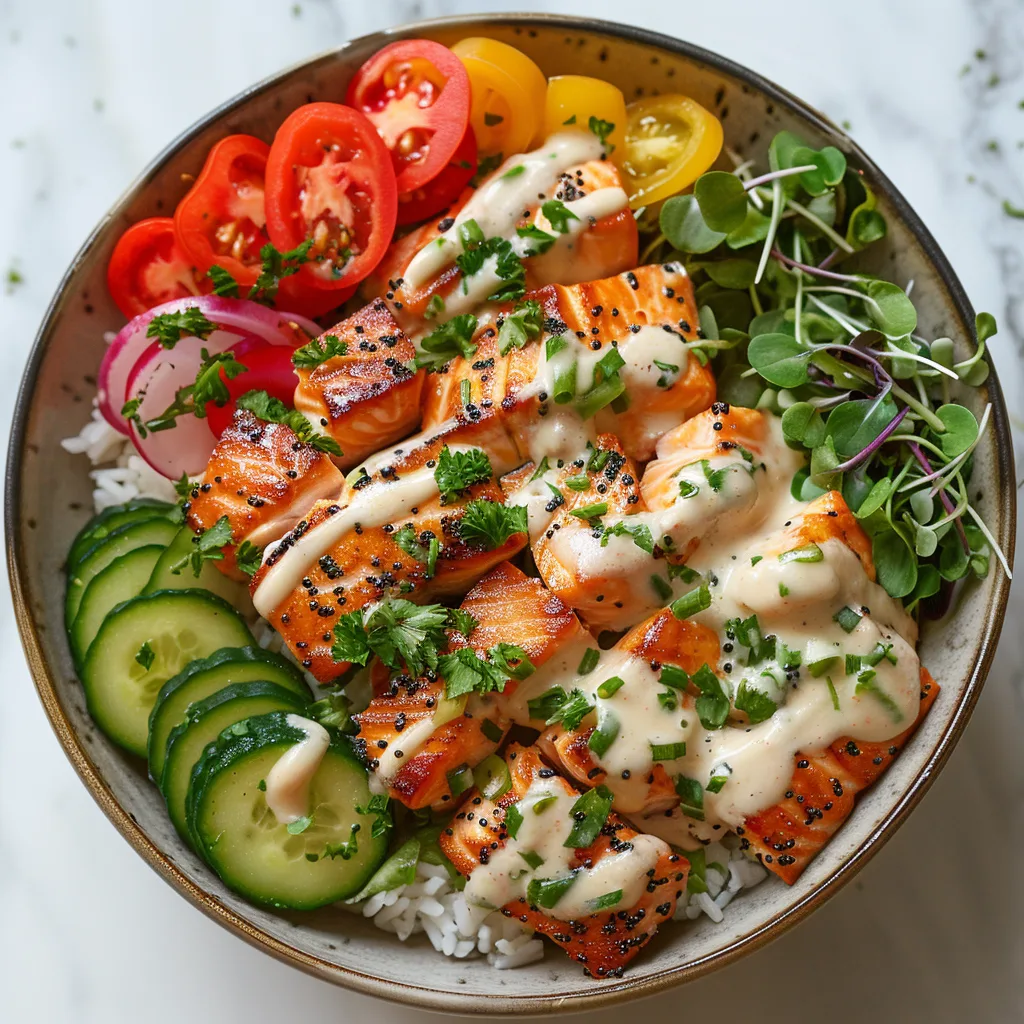
Salmon Power Bowls with lemon tahini sauce are nutrient-dense nutritional powerhouses that combine high-quality protein with complex carbohydrates and roasted seasonal vegetables. This vibrant meal features succulent broiled salmon fillets coated in a savory mustard and garlic crust, served over fluffy quinoa with a zesty, creamy dressing. It represents a perfectly balanced approach to the modern grain bowl, focusing on diverse textures and bright, citrus-forward flavors that appeal to health-conscious home cooks seeking a restaurant-quality lunch or dinner experience.
Recipe Overview
| Prep Time | Cook Time | Total Time | Servings | Difficulty | Cuisine | Category | Calories |
|---|---|---|---|---|---|---|---|
| 15 mins | 30 mins | 45 mins | 2 | Easy | American | Main Course | 540 kcal |
Why This Recipe Works
The success of these Salmon Power Bowls with lemon tahini sauce lies in the strategic contrast between the warm, roasted root vegetables and the bright, acidic profile of the dressing. As a culinary developer, I find that parsnips and sweet potatoes provide a necessary earthy sweetness that balances the oily richness of the brook-seared salmon. The addition of Brussels sprouts introduces a slight bitterness and crunch, ensuring every bite offers a different sensory experience.
Using the broiler for the salmon is a professional shortcut that creates a beautiful caramelized crust without overcooking the delicate interior. While many recipes rely on heavy fats for flavor, this bowl utilizes rice vinegar and lemon juice to lift the heavy components. It is an ideal meal-prep solution because the sturdy vegetables and well-emulsified sauce hold up exceptionally well in the refrigerator for several days.
Ingredients
| Ingredient | Quantity | Purpose | Substitutions |
|---|---|---|---|
| Salmon Fillets | 8 ounces | Primary protein source | Steelhead trout or Arctic char |
| Quinoa | 1/3 cup dry | Complex carbohydrate base | Brown rice or farro |
| Tahini | 1/4 cup | Creamy, nutty sauce base | Sunbutter or almond butter |
| Parsnips | 2 medium | Starchy sweetness and fiber | Carrots or rutabaga |
| Brussels Sprouts | 1 cup | Sulfuric crunch and color | Broccoli florets |
| Stone Ground Mustard | 1/2 tbsp | Tangy binder for salmon crust | Dijon mustard |
| Rice Vinegar | 2 tbsp | Acidic balance for the sauce | Apple cider vinegar |
Step-by-Step Instructions
Roasting the Vegetables
- Preheat your oven to 375ºF and line a large sheet pan with parchment paper to prevent sticking.
- Spread the prepared parsnips, halved Brussels sprouts, and chopped sweet potatoes evenly across the pan.
- Drizzle the vegetables with olive oil and toss thoroughly to ensure every piece is lightly coated.
- Sprinkle with garlic powder and kosher salt then roast for 20 to 30 minutes until the edges are charred.
Preparing Grains and Sauce
- Combine the dry quinoa and water in a small saucepan and bring to a boil.
- Reduce the heat to low, cover, and simmer for about 15 minutes until the water is fully absorbed.
- Whisk the tahini, lemon juice, rice vinegar, non-dairy milk, and salt in a small bowl until smooth.
- Adjust the sauce consistency by adding an extra tablespoon of milk if the tahini is particularly thick.
Finishing the Salmon
- Adjust your oven rack to the top position and set the oven to the broil setting at 400ºF.
- Pat the salmon strips completely dry with a paper towel to ensure the glaze adheres properly.
- Mix the mustard, minced garlic, lemon juice, and spices to create a thick paste.
- Spread the mustard mixture over the salmon and broil for 6 to 8 minutes until the fish flakes easily.
- Check the salmon at the 5-minute mark to ensure the high heat does not burn the garlic.
- Assemble the bowls by layering the grains, roasted vegetables, and salmon before drizzling with the sauce.
Chef Tips for Perfect Results
- Always pat the fish dry before applying the mustard glaze to prevent the topping from sliding off during cooking.
- Cut your sweet potatoes and parsnips into uniform sizes to ensure they finish roasting at the exact same time.
- Use a thermometer to check the salmon internal temperature as 145ºF is the standard for safety and texture.
- Vigorously whisk the tahini sauce because the fat and acid need mechanical force to emulsify into a creamy texture.
- Toast the dry quinoa in the pot for two minutes before adding water to unlock a deeper, nuttier flavor profile.
Common Mistakes to Avoid
Overcrowding the roasting pan: When vegetables are too close together they steam instead of roasting. Use two pans if necessary to ensure the Brussels sprouts get those crispy, charred edges.
Overcooking the salmon: Lean salmon fillets can turn dry and chalky within sixty seconds of being finished. Pull the fish from the oven when the center is still slightly translucent as carryover heat completes the process.
Neglecting the tahini quality: Bitter tahini can ruin the entire flavor profile of the Salmon Power Bowls with lemon tahini sauce. Use a high-quality, runny Mediterranean tahini for the smoothest results.
Using cold non-dairy milk: Adding ice-cold milk to tahini can cause the oils to seize up temporarily. Use room-temperature milk or water to maintain a silky, pourable consistency in your dressing.
Variations and Substitutions
| Ingredient | Substitution | Flavor Impact | Best Use |
|---|---|---|---|
| Parsnips | Butternut Squash | Sweeter and softer | Autumn seasonal bowls |
| Rice Vinegar | Lime Juice | Sharper, tropical citrus | Summer variations |
| Quinoa | Cauliflower Rice | Lighter and lower carb | Ketogenic-friendly diets |
| Stone Ground Mustard | Miso Paste | Salty, umami depth | Asian-inspired twist |
Serving Suggestions and Pairings
These power bowls are a complete meal on their own but they pair beautifully with a side of lightly pickled cucumbers. The acidity of pickles cuts through the richness of the tahini and the fat in the salmon. For a beverage pairing, a chilled sparkling mineral water with a squeeze of fresh lime complements the citrus notes perfectly. If serving for a dinner party, consider adding a sprinkle of toasted sesame seeds or fresh parsley for a professional garnish.
Storage and Reheating
| Method | Duration | Instructions | Best Result |
|---|---|---|---|
| Refrigerator | 3 Days | Store components in separate airtight containers | Veggie crunch stays intact |
| Microwave | 90 Seconds | Reheat salmon at 50% power to avoid rubbery texture | Quick work lunch |
| Oven | 10 Mins | Heat veggies and salmon at 325ºF covered with foil | Restores roasted texture |
Nutritional Information
| Nutrient | Amount per Serving |
|---|---|
| Calories | 540 kcal |
| Protein | 34g |
| Total Fat | 26g |
| Carbohydrates | 48g |
| Fiber | 9g |
| Sodium | 620mg |
Note: Approximate values based on standard USDA databases.
Frequently Asked Questions
Can I use frozen salmon for this recipe?
Yes, you can use frozen salmon as long as you thaw it completely in the refrigerator before cooking. Ensure you pat the fillets very dry with paper towels to remove excess moisture that frozen fish often retains.
How do I know when the salmon is perfectly cooked?
The salmon is ready when the flesh turns opaque and flakes easily with a gentle press of a fork. The internal temperature should reach 145ºF for the best balance of safety and moisture.
What can I use if I don’t have tahini?
You can substitute tahini with smooth almond butter or sunflower seed butter for a similar creamy texture. Adjust the lemon juice slightly as these nut butters can be sweeter than traditional sesame-based tahini.
Can I make these power bowls ahead of time?
These bowls are excellent for meal prep and can be assembled up to three days in advance. Keep the sauce in a separate small container to prevent the grains from becoming soggy during storage.
How do I keep the tahini sauce from seizing?
Avoid adding cold water or milk directly to the tahini; use room temperature liquids instead. If the sauce begins to clump, continue whisking vigorously while adding liquid one teaspoon at a time until it smooths out.
Conclusion
Salmon Power Bowls with lemon tahini sauce offer a sophisticated way to fuel your body with wholesome, vibrant ingredients. By combining the omega-3 benefits of salmon with the fiber from roasted vegetables and quinoa, you create a satisfying meal that leaves you feeling energized. This recipe is versatile enough for busy weeknights yet elegant enough for a weekend lunch with friends. Experience the perfect harmony of textures in every bite, highlighted by the irresistible creaminess of the zesty lemon tahini sauce.
PrintSalmon Power Bowls with Lemon Tahini Sauce
Nutrient-packed bowls combining broiled salmon, roasted seasonal vegetables, and fluffy quinoa with a zesty lemon tahini sauce. A balanced, restaurant-quality meal high in protein and healthy fats.
- Prep Time: 15
- Cook Time: 30
- Total Time: 45
- Yield: 2 servings
- Category: Dinner
- Method: Roasting and Broiling
- Cuisine: American
- Diet: Kosher
Ingredients
Salmon Fillets (8 ounces)
Quinoa (1/3 cup dry)
Tahini (1/4 cup)
Lemon (1)
Parsnips (2 medium)
Brussels Sprouts (1 cup)
Stone Ground Mustard (1/2 tbsp)
Rice Vinegar (1 tbsp)
Olive Oil (2 tbsp)
Garlic (1 clove)
Sea Salt (to taste)
Black Pepper (to taste)
Instructions
Preheat oven to 425°F (220°C). Rinse quinoa, drain, and cook according to package instructions.
Toss parsnips and Brussels sprouts with 1 tbsp olive oil, 1 tsp salt, and pepper. Roast for 25-30 minutes.
Mix salmon with 1 tsp mustard, 1 tsp olive oil, minced garlic, salt, and pepper. Place skin-side down on a baking sheet and broil for 8-10 minutes.
Whisk tahini with lemon juice, 1 tbsp rice vinegar, 1 tbsp water (to thin), and a pinch of salt until smooth.
Assemble bowls with warm quinoa, roasted vegetables, salmon, and drizzle with lemon tahini sauce.
Notes
Storage: Refrigerate assembled bowls for up to 4 days.
Substitution for mustard: Dijon mustard.
For vegan option: substitute salmon with marinated tofu or chickpeas.
Adjust tahini consistency by adding water, a teaspoon at a time.