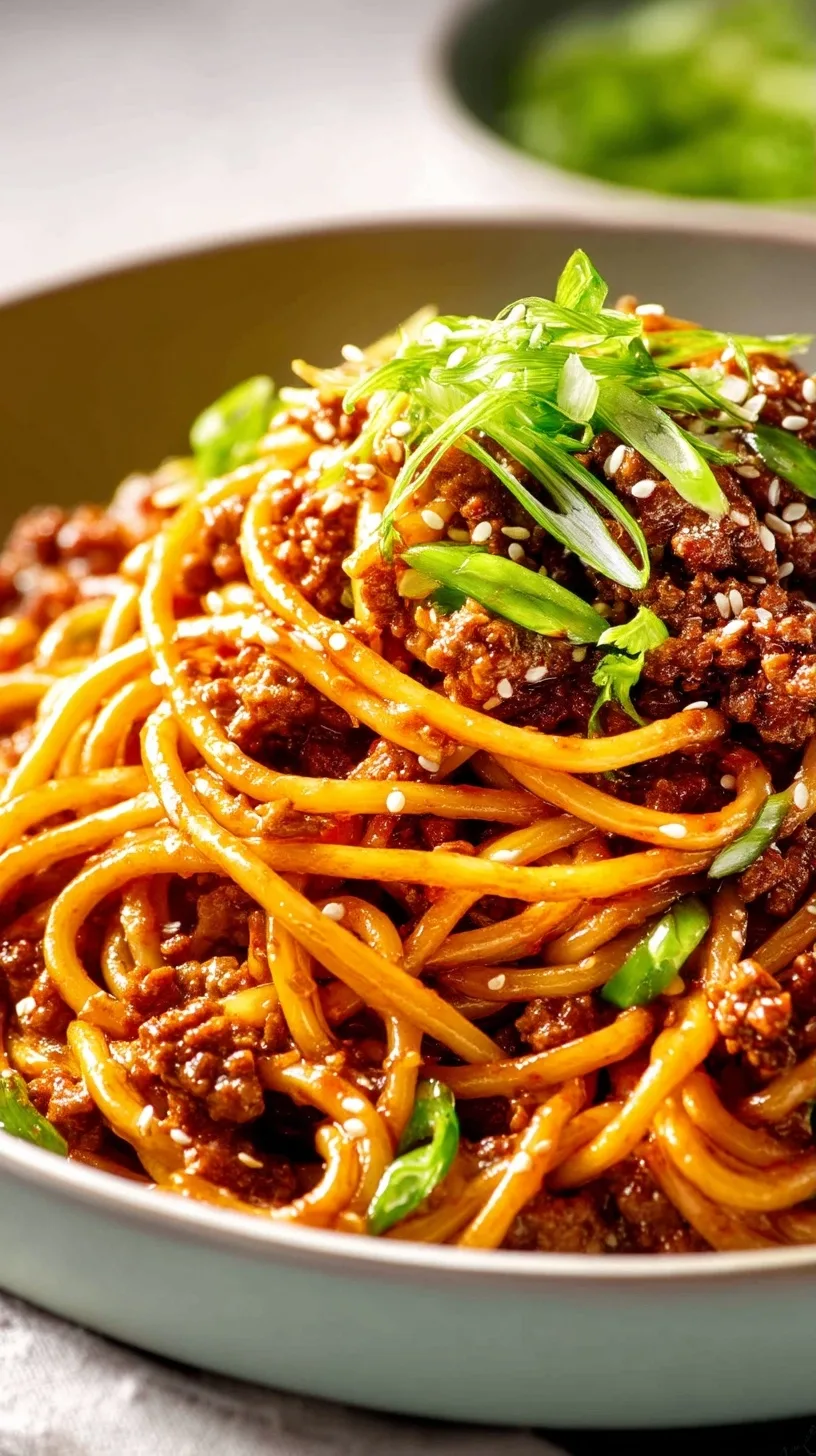
Mongolian Ground Beef Noodles is a savory, 20-minute stir-fry dish featuring tender rice noodles and caramelized ground beef tossed in a rich ginger-garlic soy glaze. This Mongolian Ground Beef Noodles recipe provides a faster, more accessible alternative to traditional takeout by using affordable pantry staples and lean protein. It bridges the gap between a classic noodle stir-fry and the bold, sweet-savory profiles typical of Mongolian-inspired American-Chinese cuisine.
| Prep Time | Cook Time | Total Time | Servings | Difficulty | Cuisine | Category | Calories |
|---|---|---|---|---|---|---|---|
| 10 Mins | 10 Mins | 20 Mins | 4 | Easy | American-Chinese | Main Course | 485 kcal |
Why This Recipe Works
This recipe excels because it utilizes the high surface area of ground beef to maximize browning and flavor absorption. Unlike traditional sliced flank steak, ground beef creates tiny crumbles that trap the thick sauce in every nook, ensuring that no bite of noodle goes unseasoned. The combination of dark soy sauce and brown sugar creates a deep mahogany glaze that mimics the complex reductions found in high-end Asian bistros without requiring hours of simmering.
I find that the use of rice noodles makes this dish naturally lighter and gluten-free friendly compared to heavy wheat-based alternatives. The texture contrast between the slippery, chewy noodles and the crispy edges of the seared beef provides a satisfying mouthfeel that children and adults alike enjoy. It is a one-pan wonder that solves the weeknight dinner dilemma for busy American families seeking high protein and bold flavor.
Ingredients
| Ingredient | Quantity | Purpose | Substitutions |
|---|---|---|---|
| Rice noodles | 10 oz | The starchy base that absorbs the sauce perfectly. | Linguine or wide rice sticks. |
| Ground beef (80/20) | 1 lb | Provides the savory fat and protein foundation. | Ground turkey or chicken. |
| Low-sodium soy sauce | 1/2 cup | Adds depth and salty umami without overshooting salt levels. | Tamari for gluten-free diets. |
| Dark soy sauce | 2 tbsp | Responsible for the iconic dark color and caramel flavor. | Extra low-sodium soy with molasses. |
| Brown sugar | 1/4 cup | Balances the saltiness and aids in the caramelization. | Honey or coconut sugar. |
| Cornstarch | 3 tbsp | Acts as the thickening agent for a glossy finish. | Arrowroot powder. |
| Fresh ginger | 1 tsp | Provides a spicy, bright aromatic baseline. | 1/2 tsp ground ginger. |
| Fresh garlic | 4 cloves | Infuses the oil and beef with essential pungency. | Garlic paste. |
Step-by-Step Instructions
Phase 1: Sauce and Noodle Preparation
- Whisk together the low-sodium soy sauce, dark soy sauce, water, brown sugar, and cornstarch in a small bowl until the sugar dissolves and no lumps remain.
- Boil a pot of water and cook the rice noodles according to the package instructions until al dente, usually 6 to 8 minutes.
- Drain the noodles and rinse briefly with cool water to prevent sticking, then set them aside.
Phase 2: Searing and Flavoring
- Heat a large skillet or wok over medium-high heat with a teaspoon of neutral oil.
- Add the ground beef to the hot pan and break it apart into small crumbles using a wooden spatula.
- Cook the beef undisturbed for 2 minutes to develop a brown crust before stirring, then continue cooking until almost no pink remains.
- Toss in the minced ginger and garlic, stirring constantly for 2 to 3 minutes to prevent the garlic from burning.
Phase 3: Thickening and Finishing
- Pour the prepared sauce mixture over the browned beef, ensuring the cornstarch has not settled at the bottom of the bowl.
- Simmer the sauce for 3 to 4 minutes until it transforms into a thick, glossy syrup that coats the meat.
- Fold in the cooked rice noodles and toss vigorously using tongs or a spatula until every strand is dark and coated.
- Garnish the dish with a generous handful of sliced green onions and toasted white sesame seeds.
Chef Tips for Perfect Results
- Avoid overcooking your rice noodles by removing them from the boiling water one minute early, as they will soften further in the sauce.
- Press the ground beef firmly into the pan when you first add it to encourage the Maillard reaction which produces those sought-after crispy bits.
- Use fresh aromatics whenever possible because pre-minced garlic can often have a bitter aftertaste that disrupts the sweetness of the sauce.
- Adjust the sauce thickness by adding a tablespoon of water if the noodles soak up the liquid too quickly during tossing.
- Ensure your pan is screaming hot before adding the beef to prevent the meat from steaming in its own juices.
Common Mistakes to Avoid
One frequent error is failing to whisk the cornstarch stirred into the sauce immediately before pouring it into the pan. Cornstarch settles quickly, so if you don’t re-mix it, you will end up with a watery sauce and a clump of gelatin at the bottom. To fix this, simply stir the sauce bowl again with a fork right as you add it to the beef.
Another mistake is using lean beef with less than 10% fat which can result in dry, rubbery crumbles. If you choose an ultra-lean beef, add a tablespoon of sesame oil to the pan to provide the necessary fat for a silky sauce texture. Overcrowding the pan can also prevent browning, so use the widest skillet you own for the best results.
Variations and Substitutions
| Ingredient | Substitution | Flavor Impact | Best Use |
|---|---|---|---|
| Ground Beef | Ground Turkey | Lighter, less rich flavor profile. | Healthy weeknight alternative. |
| Rice Noodles | Zucchini Noodles | Fresh, vegetal, and low calorie. | Keto-friendly meal planning. |
| Brown Sugar | Maple Syrup | Adds a woody, floral sweetness. | Refined sugar-free option. |
| Soy Sauce | Coconut Aminos | Sweeter and less salty than soy. | Soy-free dietary needs. |
Serving Suggestions and Pairings
This savory dish pairs exceptionally well with a side of steamed broccoli or quick-pickled cucumbers to cut through the richness of the soy and beef. For an authentic experience, serve these noodles in deep bowls with an extra drizzle of sriracha or chili oil for heat. It makes for a complete meal, but adding a side of vegetable spring rolls can elevate the dining experience for guests. In American households, this is often served alongside a ginger-based salad to refresh the palate.
Storage and Reheating
| Method | Duration | Instructions | Best Result |
|---|---|---|---|
| Refrigerator | 3-4 Days | Place in an airtight glass container. | Keeps noodles moist and chewy. |
| Freezer | 2 Months | Store in freezer-safe bags with air removed. | Best for the beef, noodles may soften. |
| Reheating | 2-3 Mins | Microwave with a splash of water and cover. | Restores the glossy sauce texture. |
Nutritional Information
| Nutrient | Amount per Serving |
|---|---|
| Calories | 485 kcal |
| Protein | 28g |
| Total Fat | 18g |
| Carbohydrates | 52g |
| Fiber | 2g |
| Sugar | 14g |
| Sodium | 1150mg |
Note: Approximate values based on 80/20 beef.
Frequently Asked Questions
Can I use dried ginger instead of fresh ginger?
Yes, you can substitute fresh ginger with roughly half a teaspoon of ground dried ginger. However, the fresh version provides a much more vibrant and aromatic punch that defines the Mongolian flavor profile. If you have any fresh ginger available, it is always the preferred choice for this recipe.
What can I use if I do not have dark soy sauce?
You can substitute dark soy sauce with an equal amount of regular soy sauce mixed with a teaspoon of molasses or extra brown sugar. Dark soy sauce is primarily used for its intense color and viscous texture, so your dish might look lighter without it. The flavor will remain largely the same, but the visual appeal of the dark glaze will be slightly muted.
How do I prevent the rice noodles from clumping together?
Rinse the noodles under cold water immediately after boiling to remove the excess surface starch that causes sticking. If you are preparing them in advance, toss them with a teaspoon of neutral oil before letting them sit. This creates a barrier that keeps the noodles slippery and ready for the sauce.
Is this Mongolian beef recipe spicy?
No, this particular version is mild and kid-friendly with a focus on sweet and savory notes. If you prefer heat, you can add half a teaspoon of red pepper flakes or a tablespoon of sambal oelek when cooking the garlic and ginger. This allows you to customize the spice level to your family’s personal preference.
Can I make this dish ahead of time for meal prep?
This recipe is excellent for meal prep as the flavors actually deepen after sitting in the refrigerator overnight. To maintain the best texture, keep the garnishes separate until you are ready to serve. When reheating, remember to add a tiny splash of water to help loosen the sauce as it warms up.
Conclusion
Mastering Mongolian Ground Beef Noodles is a game-changer for anyone looking to bring restaurant-quality flavors into their home kitchen with minimal effort. This dish balances the savory depth of soy with the bright notes of ginger and garlic, creating a meal that is both comforting and impressive. By following these steps and utilizing fresh ingredients, you can serve a balanced dinner that satisfies the whole family in less time than it takes to order delivery. Enjoy the bold, caramelized goodness of this easy stir-fry as your new weeknight favorite.
PrintMongolian Ground Beef Noodles
A savory, 20-minute stir-fry combining tender rice noodles and caramelized ground beef in a rich ginger-garlic soy glaze. Gluten-free and high in protein, it’s a fast, family-friendly main course inspired by American-Chinese cuisine, perfect for weeknight dinners.
- Prep Time: 10
- Cook Time: 10
- Total Time: 20
- Yield: 4
- Category: Dinner
- Method: Stir-fry
- Cuisine: American-Chinese
- Diet: Non-Vegetarian
Ingredients
10 oz rice noodles
1 lb ground beef (80/20)
1/2 cup low-sodium soy sauce
2 tbsp dark soy sauce
1/4 cup brown sugar
3 tbsp cornstarch
2 tbsp minced ginger
5–6 garlic cloves, minced
1 tbsp vegetable oil
1 tsp soy sauce (household)
1 tsp sesame oil (optional)
Green onions, sliced (for garnish)
Red pepper flakes (optional)
Instructions
Boil noodles according to package instructions, then drain and set aside
Heat 1 tbsp vegetable oil in a large pan or wok over medium-high heat
Cook ground beef until browned, pressing into flat 1/2-inch-thick crumbles
Add minced ginger, garlic, and soy sauce (household) to the pan, stirring until fragrant
Combine cornstarch, low-sodium soy sauce, dark soy sauce, brown sugar, sesame oil, and 2–3 tbsp water in a small bowl
Stir the sauce until smooth and gradually add it to the beef mixture, thickening into a glossy glaze
Toss in cooked noodles and coat thoroughly with the sauce until heated through
Garnish with green onions and red pepper flakes if desired
Notes
Use ground turkey or chicken for a leaner protein alternative
Adjust to taste: add honey instead of brown sugar for a different sweetener
Add molasses to extra low-sodium soy sauce if substituting for dark soy
Store leftovers in an airtight container in the refrigerator for 3–4 days