This post may contain affiliate links. Please read our disclosure policy.
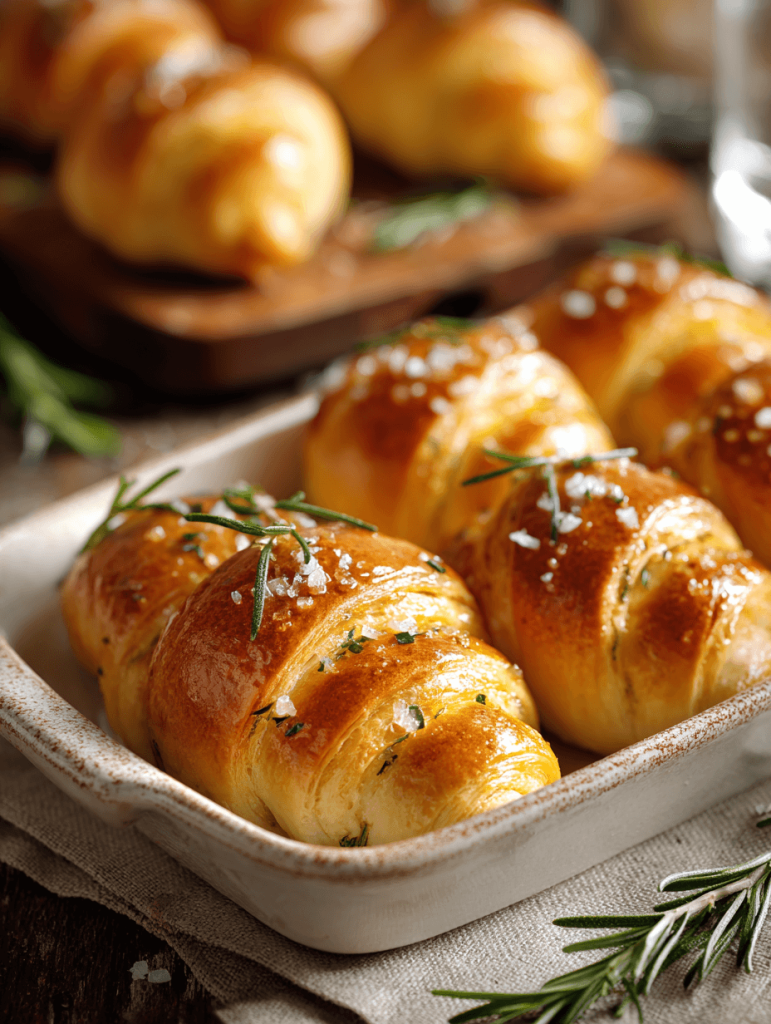
Picture pulling golden, buttery crescent rolls from your oven, their flaky layers glistening with garlic herb butter and sea salt crystals. These Garlic and Herb Crescent Rolls transform simple pantry ingredients into bakery-worthy masterpieces that’ll have everyone asking for your secret. Unlike complicated French croissant methods requiring days of lamination, this approachable recipe delivers incredible flavor and texture in just 90 minutes from start to finish.
Table of Contents
Why You’ll Love This Crescent Roll Recipe
These rolls strike the perfect balance between impressive presentation and manageable preparation. The yeasted dough creates tender, pull-apart layers while fresh rosemary and thyme infuse each bite with aromatic flavor. Whether you’re serving them alongside Sunday roast, holiday dinners, or weekend brunch, they elevate any meal from ordinary to extraordinary. The garlic herb butter brushed on warm rolls creates an irresistible golden crust that stays soft for days when stored properly.
Essential Ingredients for Perfect Crescent Rolls
| Ingredient Category | Items Needed | Purpose |
|---|---|---|
| Dough Base | Warm water, active dry yeast, all-purpose flour | Creates structure and rise |
| Enrichment | Unsalted butter, egg, sugar | Adds tenderness and flavor |
| Seasoning | Fresh garlic, rosemary, thyme, salt | Provides aromatic depth |
| Topping | Butter, garlic, herbs, flaky sea salt | Creates signature finish |
Ingredient Notes
You’ll need quality measuring cups and spoons for accuracy, as precision matters in yeast baking. The warm water should register between 105-110°F use a kitchen thermometer to avoid killing the yeast. Fresh herbs make a noticeable difference compared to dried versions, though you can substitute 1 teaspoon dried herbs for every tablespoon of fresh. A reliable electric mixer with dough hook attachment simplifies the mixing process, though hand mixing works perfectly fine for this forgiving dough.
Step-by-Step Instructions
Preparing the Dough
Start by combining 1 cup warm water with 2¼ teaspoons active dry yeast in a mixing bowl. Let this mixture sit undisturbed for five minutes until it becomes foamy, confirming your yeast is active and ready to work. In a separate large bowl, whisk together the proofed yeast mixture, ½ cup melted butter (cooled to room temperature), ⅓ cup sugar, and one large egg until smooth and combined.
Add 4 cups all-purpose flour, ½ teaspoon baking powder, 1 teaspoon salt, 2 minced garlic cloves, and 1 tablespoon mixed chopped rosemary and thyme. Using a wooden spoon or your electric mixer on low speed, stir until ingredients just come together into a shaggy ball. Avoid overmixing, as this develops too much gluten and creates tough rolls.
First Rise
Cover your bowl with a clean kitchen towel and place it in a warm, draft-free location for 30 minutes. The dough should increase noticeably in size but won’t double completely. This shortened rise time is intentional, creating tender rolls without excessive yeast flavor. While waiting, prepare your work surface by lightly dusting a cutting board with flour.
Shaping the Crescents
Divide the risen dough into two equal portions, returning one half to the covered bowl. On your floured surface, roll the first portion into a 12-inch circle approximately ¼-inch thick. A rolling pin ensures even thickness throughout. Using a sharp chef’s knife or pizza cutter, slice the circle into 12 equal triangular wedges, like cutting a pizza.
Starting from the wide outer edge, roll each triangle toward the point, applying gentle pressure to keep the roll tight. Place each shaped roll point-side-down in a buttered baking sheet, spacing them about 2 inches apart. Repeat this entire process with the second dough portion.
Second Rise and Baking
Cover your filled baking sheets with towels and let rolls rise for an additional 20-30 minutes while your oven preheats to 375°F. The rolls should look puffy and slightly increased in size. Bake for approximately 20 minutes until the tops turn deep golden brown and the rolls sound hollow when tapped.
Finishing Touch
While rolls bake, prepare the garlic herb butter by melting ¼ cup butter with 1 minced garlic clove and 1 teaspoon fresh chopped herbs in a small pot. The moment your rolls emerge from the oven, generously brush this aromatic butter over the tops using a pastry brush or spoon. Finish with a sprinkle of flaky sea salt for textural contrast and visual appeal.
Pro Tips for Bakery-Quality Results
Temperature matters tremendously in yeast baking. Water that’s too hot kills yeast, while cold water won’t activate it properly. The ideal range sits between 105-110°F, feeling warm but not hot to the touch. Don’t skip the butter cooling step either adding hot melted butter directly to eggs can scramble them.
Fresh garlic delivers superior flavor compared to jarred alternatives. Use a garlic press for evenly minced cloves that distribute throughout the dough. The herbs should be finely chopped using sharp kitchen knives to prevent large woody pieces in your rolls.
Room temperature ingredients combine more easily than cold ones. Set your egg and butter out 30 minutes before starting, or quick-temper cold eggs by placing them in warm water for 5 minutes. This seemingly small detail creates smoother dough with better texture.
Storage and Reheating
Store cooled rolls in an airtight container at room temperature for up to 3 days. For longer storage, freeze individually wrapped rolls for up to 2 months. Reheat frozen rolls directly in a 350°F oven for 10-12 minutes, or microwave individual rolls for 20-30 seconds. The garlic butter keeps them remarkably moist even after freezing.
Flavor Variations to Try
Transform these basic rolls into endless variations by swapping the herbs. Try Italian seasoning with Parmesan cheese, everything bagel seasoning for breakfast versions, or cinnamon sugar for sweet dessert rolls. You can also create stuffed versions by adding cheese, ham, or caramelized onions before rolling the triangles. The possibilities are truly limitless with this versatile dough base.
Frequently Asked Questions
Can I make the dough ahead of time?
Yes, prepare the dough through the first rise, then refrigerate overnight in a covered bowl. Let it come to room temperature for 30 minutes before shaping the next day.
Why didn’t my rolls rise properly?
Check your yeast expiration date and water temperature. Old yeast or water that’s too hot are the most common culprits. Your rising environment should be warm (75-80°F) and draft-free.
Can I use dried herbs instead of fresh?
Absolutely. Replace each tablespoon of fresh herbs with 1 teaspoon dried herbs. The flavor will be slightly different but still delicious.
How do I know when the rolls are fully baked?
They should be deep golden brown on top and sound hollow when tapped. An instant-read thermometer inserted in the center should read 190-200°F.
Can I freeze unbaked rolls?
Yes, shape the rolls and freeze them on baking sheets. Once solid, transfer to freezer bags. Thaw in the refrigerator overnight, let rise 30-45 minutes at room temperature, then bake as directed.
What’s the difference between crescent rolls and croissants?
Traditional croissants use laminated dough with multiple butter layers folded in, requiring extensive time and technique. These crescent rolls achieve similar flaky texture through a simpler yeasted dough method that’s much more approachable for home bakers.
Equipment List
If you found this recipe helpful, feel free to check out the kitchen equipment below. Click on any url to view and purchase the product through our Amazon affiliate links at no extra cost to you. Your support helps us keep Deliciousavors.com running and bringing you great recipes!