This post may contain affiliate links. Please read our disclosure policy.
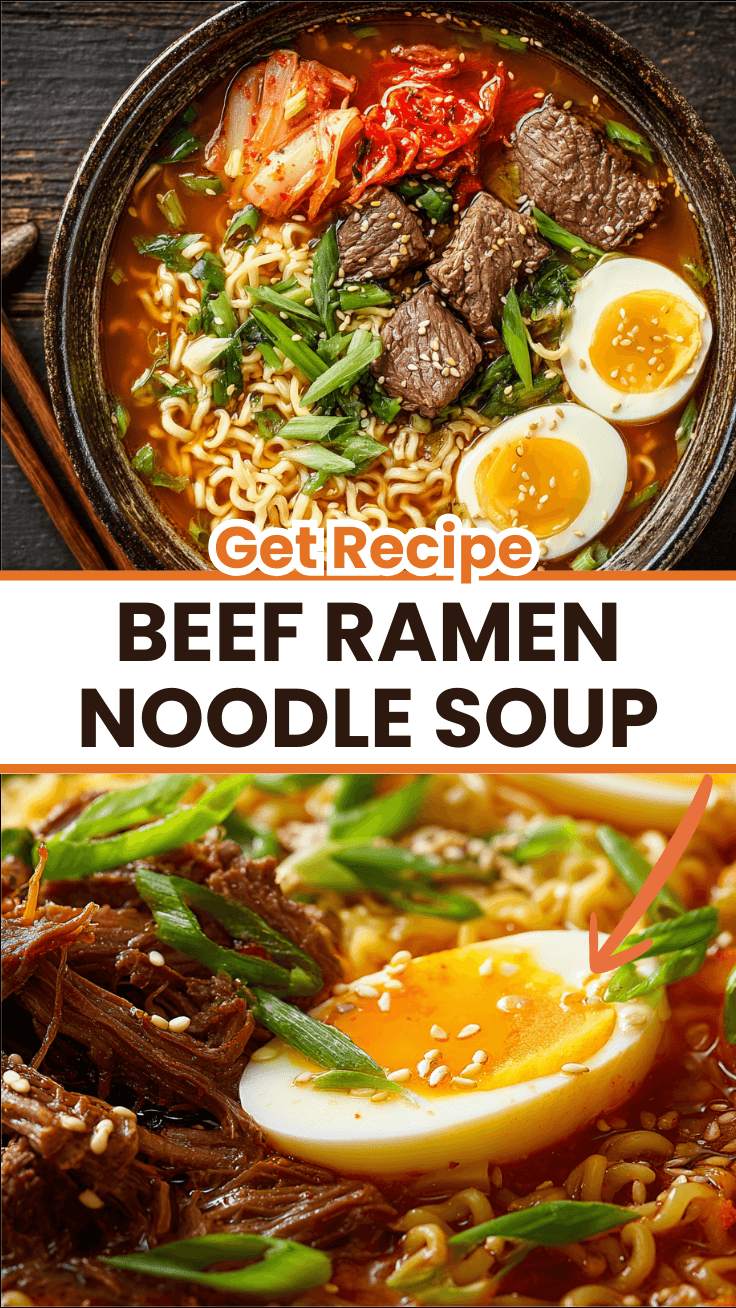
There’s something magical about slurping steaming ramen noodles from a bowl of rich, deeply flavored broth. This Beef Ramen Noodle Soup recipe brings that restaurant experience right into your home kitchen, featuring melt-in-your-mouth beef chuck simmered to perfection in a Korean-inspired broth that’s savory, slightly spicy, and utterly addictive.
Whether you’re looking for satisfying dinner ideas with ground beef alternatives or want to impress your family with a gourmet-style meal, this ramen soup delivers on every level. The slow-simmered beef creates an incredibly rich base, while the gochujang paste adds a complex heat that’s balanced beautifully by toasted sesame oil and rice wine vinegar.
Table of Contents
Why You’ll Love This Beef Ramen Soup
This isn’t your typical quick dinner recipe, but it’s absolutely worth the wait. Here’s what makes it special:
- Restaurant-quality flavor – The bone-in beef chuck and long simmer time create a broth that rivals your favorite ramen shop
- Customizable heat level – Adjust the gochujang paste to your preference
- Make-ahead friendly – The soup actually tastes better the next day
- Nutrient-packed – Loaded with protein, vegetables, and complex flavors
- Impressive presentation – Perfect for dinner parties or special occasions
While you’re preparing this recipe, having quality pots makes a significant difference in heat distribution. A heavy-bottomed dutch oven or large pot ensures even cooking throughout the long simmer time.
Essential Ingredients for Perfect Beef Ramen
The beauty of this recipe lies in its straightforward ingredient list that delivers complex flavors. Here’s what you’ll need:
For the Soup Base
| Ingredient | Quantity | Notes |
|---|---|---|
| Bone-in beef chuck | 3 lbs | The star ingredient – creates rich broth |
| Neutral oil | 2 tablespoons | For searing the beef |
| Yellow onion | 1, diced | Adds sweetness and depth |
| Garlic cloves | 4, minced | Essential aromatic |
| Fresh ginger | 2 tablespoons, minced | Provides warmth and brightness |
| Gochujang paste | 1/4 cup | Korean chili paste for heat and umami |
| Beef broth | 8 cups | Base liquid for the soup |
| Rice wine vinegar | 1 tablespoon | Balances richness |
| Fish sauce | 1 tablespoon | Optional but adds umami depth |
| Toasted sesame oil | 2 tablespoons | Finishing oil for nutty flavor |
| Fresh ramen noodles | 20 oz | The classic noodle choice |
| Kosher salt | To taste | Season throughout cooking |
| Black pepper | To taste | Freshly cracked is best |
Toppings
| Topping | Purpose |
|---|---|
| Soft boiled eggs | Creamy richness and protein |
| Green onions, minced | Fresh, sharp contrast |
| Kimchi, chopped | Tangy, spicy crunch |
| Sesame oil | Extra drizzle for aroma |
Step-by-Step Instructions
This recipe requires some patience, but the hands-on time is minimal. You’ll need a good dutch oven or heavy pot, a sharp chef’s knife for prep work, and a reliable cutting board.
Step 1: Prepare the Beef
Begin by separating the bone from your beef chuck roast if it comes in one large piece. Use a sharp chef’s knife to carefully cut along the bone, then set the bone aside you’ll add it to the broth later for extra flavor. Cut the beef into 2-inch cubes, ensuring relatively uniform sizes for even cooking. Season generously with kosher salt and freshly cracked black pepper on all sides.
Step 2: Sear for Maximum Flavor
Heat 2 tablespoons of neutral oil in your dutch oven over medium-high heat. Once the oil shimmers, add the beef cubes in a single layer don’t overcrowd the pot! You want proper browning, not steaming. Work in batches if necessary. Sear each side until deeply golden brown, about 3-4 minutes per side. This crucial step develops the foundational flavors for your soup. Remove the seared beef with a slotted spoon and transfer to a plate.
Step 3: Build the Aromatic Base
In the same pot with all those beautiful browned bits, add your diced onion. Cook for 3-4 minutes, stirring occasionally and scraping up the fond from the bottom. Add the minced garlic and ginger, cooking for another minute until incredibly fragrant. Now comes the game-changer add the gochujang paste and cook for 2-3 minutes, stirring constantly. This blooms the paste’s flavors and creates a rich, spicy base.
Step 4: Simmer to Perfection
Pour in your 8 cups of beef broth, stirring well to incorporate all the aromatics and gochujang. Bring the mixture to a gentle simmer, then return your seared beef and the reserved beef bones to the pot. Cover and reduce the heat to medium-low. Let this simmer peacefully for about 2 hours, or until the beef is fork-tender and nearly falling apart. The low, slow simmer is what transforms tough chuck into melt-in-your-mouth pieces.
Step 5: Final Seasoning
After 2 hours, carefully remove and discard the beef bones. Using two forks or a wooden spoon, gently shred the beef into bite-sized pieces right in the pot. Stir in the rice wine vinegar, fish sauce if using, and toasted sesame oil. Taste and adjust seasoning with salt and pepper. The broth should be deeply savory with a pleasant heat and subtle tanginess.
Step 6: Cook the Noodles
You have two options here: simmer the fresh ramen noodles directly in the soup for 3-4 minutes, or cook them separately in boiling water according to package directions. Cooking separately gives you more control over noodle texture and prevents the soup from becoming too starchy.
Step 7: Assemble and Serve
Ladle the hot soup and noodles into deep bowls. Top each serving with halved soft boiled eggs, chopped kimchi, minced green onions, and an extra drizzle of sesame oil. Serve immediately while piping hot.
Pro Tips for the Best Beef Ramen Soup
- Don’t skip the sear – Those caramelized bits create depth of flavor you can’t get any other way
- Control the heat – Keep the simmer gentle; boiling will make the beef tough
- Fresh ginger matters – Ground ginger won’t provide the same bright, zingy flavor
- Make it ahead – The soup improves overnight as flavors meld. Store noodles separately and add when reheating
- Customize toppings – Try nori sheets, bamboo shoots, or corn for variety
- Adjust spice level – Start with less gochujang if heat-sensitive; you can always add more
- Use quality broth – Good beef broth makes a noticeable difference in the final soup
A reliable kitchen utensil set will help you manage every step of this recipe efficiently, from stirring the aromatics to serving the finished soup.
Equipment You’ll Need
Having the right tools makes this recipe much easier to execute:
- Dutch oven or large pot – Essential for even heat distribution during the long simmer
- Sharp chef’s knife – For cutting beef and prepping vegetables
- Quality cutting board – Protects your counters and knives
- Kitchen utensils set – Slotted spoons, ladles, and wooden spoons
- Mixing bowls – For organizing prepped ingredients
- Measuring cups and spoons – Accurate measurements ensure consistent results
Nutrition Information
This hearty beef ramen soup provides substantial nutrition in every bowl. Each serving delivers approximately 450-550 calories depending on toppings, with 35-40g of protein from the beef and eggs. The beef chuck provides iron and B vitamins, while the broth offers minerals and collagen. The ginger and garlic contribute anti-inflammatory properties, making this more than just comfort food it’s genuinely nourishing.
Storage and Reheating Tips
Store the soup and noodles separately in airtight containers in the refrigerator for up to 4 days. The broth actually tastes better after sitting overnight as the flavors continue to develop. Reheat gently on the stovetop over medium-low heat, stirring occasionally. Add fresh noodles or reheat the cooked noodles separately to prevent them from becoming mushy. The soup can also be frozen for up to 3 months just leave out the noodles and add fresh ones when reheating.
Frequently Asked Questions
Can I use a different cut of beef?
Yes! While bone-in beef chuck is ideal for flavor and texture, you can use beef short ribs, brisket, or even oxtail. Each will provide slightly different flavors but all work beautifully with the long simmer time. Avoid lean cuts like sirloin, which will become dry and tough.
Is there a substitute for gochujang?
If you can’t find gochujang, combine 2 tablespoons of miso paste with 2 tablespoons of sriracha and 1 teaspoon of sugar. It won’t be identical, but it provides similar umami and heat. You can also use Thai red curry paste for a different flavor profile.
Can I make this in a slow cooker or Instant Pot?
Absolutely! For a slow cooker, sear the beef and sauté the aromatics as directed, then transfer everything to your slow cooker and cook on low for 6-8 hours. For an Instant Pot, use the sauté function for browning, then pressure cook on high for 45 minutes with natural release. Both methods work excellently.
What type of noodles work best?
Fresh ramen noodles are the gold standard, usually found in the refrigerated section of Asian markets or well-stocked grocery stores. Dried ramen noodles (not the instant packet kind) work well too. In a pinch, use udon noodles or even spaghetti, though the texture will differ from traditional ramen.
How can I make this soup spicier?
Increase the gochujang paste to 1/3 or 1/2 cup, add fresh sliced red chilies to the broth, or drizzle chili oil over each serving. You can also include a spoonful of Korean chili flakes (gochugaru) during the simmer.
Can I make a vegetarian version?
While this recipe centers around beef, you can create a vegetarian version using mushrooms (shiitake and king oyster work great), vegetable broth, and adding kombu seaweed for umami depth. The cooking time reduces significantly to about 30-40 minutes for the mushrooms to soften.
Serving Suggestions
This beef ramen soup is a complete meal on its own, but you can round out the experience with some complementary sides. Consider serving with steamed edamame, cucumber kimchi, or simple Asian-style pickled vegetables. A light side salad with sesame dressing provides a refreshing contrast to the rich soup. For drinks, cold beer, hot green tea, or even a light sake pairing work wonderfully.
Why This Recipe Works
The magic in this beef ramen soup comes from the combination of techniques and ingredients. Searing the beef creates Maillard reaction compounds that add depth and complexity. The bone-in chuck releases collagen during the long simmer, creating a silky, rich broth that coats your mouth. The gochujang paste contributes multiple layers of flavor heat, sweetness, umami, and fermented complexity that you simply can’t achieve with simple chili powder or hot sauce.
The aromatics onion, garlic, and ginger form the foundational flavor base that supports everything else. Rice wine vinegar cuts through the richness, preventing the soup from feeling heavy. Toasted sesame oil added at the end preserves its delicate, nutty aroma that would be lost with longer cooking. Together, these elements create a harmonious bowl that’s both comforting and exciting.
Final Thoughts
This Beef Ramen Noodle Soup represents the perfect marriage of technique and flavor. While it requires more time than typical quick dinner recipes, the hands-on effort is minimal most of the cooking happens while you go about your day. The result is a restaurant-quality bowl of ramen that will impress your family and friends while providing deep, satisfying comfort.
Whether you’re looking to expand beyond simple ground meat recipes for dinner or want to master an impressive dish for special occasions, this beef ramen soup delivers on every level. The rich broth, tender beef, springy noodles, and variety of toppings create textural and flavor contrasts that make every spoonful interesting.
Don’t be intimidated by the ingredient list or cooking time. This recipe is more forgiving than it appears, and the process is straightforward. Once you’ve made it a few times, you’ll find yourself craving that deeply savory, slightly spicy broth and tender beef. Make a double batch and freeze half future you will be incredibly grateful for homemade ramen ready to reheat on busy weeknights.
If you found this recipe helpful, feel free to check out the kitchen equipment. Click on any url to view and purchase the product through our Amazon affiliate links at no extra cost to you. Your support helps us keep Deliciousavors.com running and bringing you great recipes!
PrintBeef Ramen Noodle Soup Recipe : Rich & Flavorful in 2.5 Hours
This restaurant-quality Beef Ramen Noodle Soup features tender beef chuck simmered in a rich Korean-inspired broth with gochujang, ginger, and sesame oil. Topped with soft boiled eggs, kimchi, and green onions for the ultimate comfort bowl.
- Prep Time: 30
- Cook Time: 135
- Total Time: 165
- Yield: 6
- Category: Main Course, Soup
- Method: Simmering
- Cuisine: Korean-American
Ingredients
2 tablespoons neutral oil
3 lbs bone-in beef chuck
1 yellow onion, diced
4 garlic cloves, minced
2 tablespoons fresh minced ginger
1/4 cup gochujang paste
8 cups beef broth
1 tablespoon rice wine vinegar
1 tablespoon fish sauce, optional
2 tablespoons toasted sesame oil
20 oz fresh ramen noodles
kosher salt
freshly cracked pepper
Toppings:
soft boiled eggs
minced green onions
kimchi, chopped
sesame oil, for drizzling
Instructions
1. Prep the beef. If using a large piece of bone-in chuck, cut the bone away and set aside. Cut the beef into 2-inch cubes and season with salt and pepper.
2. Sear the beef. Heat the oil in a dutch oven over medium-high heat. Add the beef to the pot in a single layer (you may need to do this in batches). Sear until browned on all sides, then remove from the pot using a slotted spoon and transfer to a plate.
3. Saute the aromatics. Add the diced onion, garlic, and ginger to the pot and cook for 3-4 minutes, stirring occasionally, until browned and fragrant. Add the gochujang paste and cook for another 2-3 minutes.
4. Add the beef and broth. Add the beef broth to the pot and stir well to combine. Bring to a gentle simmer and add the seared beef and beef bones. Cover, reduce the heat to medium-low, and simmer for 2 hours or so, until the beef is tender.
5. Season and finish. Remove the beef bones from the soup and discard. Gently shred the beef, add the rice wine vinegar, fish sauce, and sesame oil to the soup. Season to taste with salt and pepper. You can simmer the noodles directly in the soup, or cook separately. Ladle the soup and noodles into bowls and top with chopped kimchi, soft boiled eggs, and green onions.
Notes
Don’t skip searing the beef—it creates essential depth of flavor
Keep the simmer gentle to ensure tender beef
Fresh ginger provides the best flavor over ground
Store soup and noodles separately for best texture
Soup tastes even better the next day as flavors meld
Adjust gochujang amount based on your heat preference
Freeze soup without noodles for up to 3 months