
This post may contain affiliate links. Please read our disclosure policy.
If you’re searching for easy hamburger meat recipes that go beyond the ordinary, this authentic Kibbeh recipe will transform your dinner routine. These golden, crispy bulgur wheat shells stuffed with spiced ground beef and toasted pine nuts are a beloved Middle Eastern classic that’s surprisingly simple to make at home. Whether you need quick dinner ideas or want to impress guests with your culinary skills, Kibbeh delivers incredible flavor and texture in every bite.
Kibbeh (also spelled kibbe or kubbeh) is a traditional Levantine dish that combines fine bulgur wheat with ground meat to create a unique outer shell. The magic happens when you hollow out these shells and fill them with a savory mixture of seasoned meat and pine nuts, then deep-fry them to crispy perfection. This recipe is perfect for anyone looking for dinner ideas with ground beef that feel special yet remain approachable for home cooks.
Table of Contents
Why You’ll Love This Kibbeh Recipe
This Kibbeh recipe stands out among ground meat recipes for dinner for several compelling reasons. The bulgur wheat adds a subtle nutty flavor and creates a crispy exterior that contrasts beautifully with the tender, aromatic filling. The combination of allspice, cinnamon, and coriander gives both the shell and filling a warm, complex flavor profile that’s distinctly Middle Eastern.
What makes this one of the best easy meals with ground beef is its versatility. You can prepare the components ahead of time, making it ideal for meal prep. The kibbeh can be assembled and refrigerated, then fried just before serving. Plus, you can substitute lamb for beef or even use a combination of both meats for added richness.
Essential Equipment for Making Kibbeh
To prepare this recipe successfully, you’ll need several key kitchen tools. A food processor is essential for grinding the meat mixture into a smooth paste that forms the perfect shell. You’ll also need pots or a deep frying pan for the deep-frying process.
Basic kitchen utensils, a cutting board, and chef’s knives will help you prepare the onions and other ingredients efficiently. Don’t forget measuring cups and spoons for accurate seasoning, and mixing bowls to organize your ingredients as you work through this healthy dinner recipe.
Ingredients Breakdown
For the Kibbeh Shell
| Ingredient | Quantity | Notes |
|---|---|---|
| Fine bulgur wheat | 2 1/2 cups | Must be fine grade for proper texture |
| Lean ground beef or lamb | 1 1/2 lb | Cold meat works best |
| Large onion | 1 | Quartered for processing |
| Ground allspice | 2 tsp | Key aromatic spice |
| Ground coriander | 1 tsp | Adds citrus notes |
| Ground cinnamon | 1/2 tsp | Warm, sweet undertone |
| Black pepper | 1 tsp | Freshly ground preferred |
| Salt | Pinch | To taste |
| Oil for frying | As needed | Vegetable or canola oil |
For the Meat Filling
| Ingredient | Quantity | Notes |
|---|---|---|
| Olive oil | 1 tbsp | For sautéing |
| Yellow onion | 1 medium | Finely chopped or grated |
| Ground lamb or beef | 1 lb | Keep cold until cooking |
| Toasted pine nuts | 1/3 cup | Adds crunch and richness |
| Ground allspice | 1 tsp | Matches shell seasoning |
| Ground cinnamon | 1/2 tsp | Aromatic warmth |
| Salt and pepper | Pinch each | Season to preference |
Step-by-Step Instructions
Preparing the Bulgur Wheat
Begin by preparing the bulgur wheat, which forms the foundation of your kibbeh shell. Cover a fine mesh strainer (you can use a colander strainer basket) with a light cloth or cheesecloth. Add the 2 1/2 cups of fine bulgur wheat into the cloth-lined strainer, then place it in a bowl filled with water.
Let the bulgur soak for exactly 15 minutes. This allows it to absorb moisture and soften without becoming mushy. After soaking, pull up the corners of the cloth to gather the bulgur inside, then squeeze firmly to remove all excess water. You may need to repeat this squeezing process several times until the bulgur feels relatively dry. Proper drainage is crucial for achieving the right consistency in your kibbeh dough.
Making the Kibbeh Dough
Place the quartered onion into your food processor along with the 1 1/2 pounds of cold ground beef, all the spices (2 tsp allspice, 1 tsp coriander, 1/2 tsp cinnamon, 1 tsp black pepper), and a pinch of salt. Process the mixture until the meat becomes very finely ground, almost reaching a paste-like consistency. This fine texture is essential for shells that hold together during frying.
Transfer the processed meat mixture to a large mixing bowl. Add the drained bulgur wheat to the meat. Using damp hands, knead the bulgur into the meat mixture until you have a cohesive, pliable dough. The dampness of your hands prevents sticking and helps bind the ingredients. Cover the bowl and refrigerate the dough while you prepare the filling.
Preparing the Meat Filling
Heat about 1 tablespoon of olive oil in a frying pan over medium heat. Add the finely chopped or grated onion and sauté until it turns just golden, releasing its natural sweetness. This should take about 3-4 minutes.
Add the 1 pound of cold ground beef (or lamb) to the pan. Cook over medium heat, stirring occasionally with your kitchen utensils, until the meat is fully browned and no pink remains. This typically takes 7-8 minutes. Stir in the toasted pine nuts, 1 tsp allspice, 1/2 tsp cinnamon, and salt and pepper to taste. Mix everything together thoroughly, then remove from heat and let the filling cool completely before using.
Stuffing the Kibbeh
Remove the chilled kibbeh dough from the refrigerator. Prepare your workspace by placing a small bowl of water nearby and lining a baking sheet with parchment paper. Keep both the kibbeh dough and cooled filling within easy reach.
Dampen your hands with water this is the secret to working with kibbeh dough without it sticking. Take about 2 tablespoons of the kibbeh dough and form it into an oval-shaped disc in your palm. Using your index finger, create a well in the center of the disc. Gradually work the edges, rotating the kibbeh and pressing gently, to hollow out the shell and make room for filling. The goal is to create a thin-walled shell with a cavity for the meat.
Spoon about 1 tablespoon of the meat filling into the hollow. Carefully pinch the top closed, sealing the filling inside. Using both hands, gently shape the stuffed kibbeh into an oval or football shape. Place it on the prepared baking sheet. Repeat this process until all the dough and filling are used, remembering to keep your hands damp throughout. Once all kibbeh are formed, refrigerate them for 1 hour to firm up.
Frying the Kibbeh
Pour oil into a deep frying pan to a depth of about 2-3 inches. Heat the oil to 350°F (175°C). You can verify the temperature with a kitchen scale with thermometer function, or test by dropping a small piece of kibbeh dough into the oil it should sizzle gently without burning.
Carefully add the chilled kibbeh to the hot oil in small batches, being careful not to overcrowd the pan. Fry for about 5 minutes, turning occasionally with tongs, until the shells are deep golden brown and crispy. Using a slotted spoon or tongs, transfer the fried kibbeh to a pan lined with paper towels to drain excess oil. Repeat with remaining batches.
Pro Tips for Perfect Kibbeh
- Keep everything cold: Cold meat is easier to work with and creates better texture in both the shell and filling.
- Don’t skip the refrigeration: Chilling the stuffed kibbeh helps them hold their shape during frying and prevents them from falling apart.
- Maintain oil temperature: If the oil is too hot, the shells will brown before the inside is fully heated. Too cool, and they’ll absorb excess oil and become greasy.
- Practice makes perfect: Your first few kibbeh might not be perfectly shaped, but you’ll quickly get the hang of the hollowing and sealing technique.
- Use fine bulgur only: Coarse bulgur won’t create the right texture for the shell and may fall apart during frying.
Serving Suggestions
Kibbeh can be served hot, warm, or at room temperature, making it perfect for parties and gatherings. Traditional accompaniments include tahini sauce, tzatziki sauce, or plain Greek yogurt for dipping. The cool, creamy sauces provide a wonderful contrast to the warm, crispy shells.
For a complete Middle Eastern feast, serve your kibbeh alongside tabbouleh salad, hummus, baba ganoush, and warm pita bread. Fresh vegetables like cucumber, tomatoes, and pickled turnips also make excellent side dishes. This presentation turns your quick and easy dinner recipes into an impressive spread worthy of any celebration.
Storage and Reheating
Uncooked, stuffed kibbeh can be frozen for up to 3 months. Arrange them on a baking sheet and freeze until solid, then transfer to freezer bags. Fry directly from frozen, adding an extra minute or two to the cooking time.
Cooked kibbeh can be refrigerated for up to 3 days. Reheat in a oven at 375°F for about 10-12 minutes to restore crispiness, or use an air fryer at 350°F for 5-7 minutes for even better results.
Frequently Asked Questions
Can I bake kibbeh instead of frying?
Yes! For a healthier version, brush the kibbeh with olive oil and bake at 400°F for 25-30 minutes, flipping halfway through. They won’t be quite as crispy as fried versions, but they’ll still be delicious. You can also use an air fryer at 375°F for 15-18 minutes for a compromise between traditional frying and oven-baking.
What’s the difference between using beef and lamb?
Lamb provides a richer, more traditional flavor with a slightly gamey taste that’s authentic to Middle Eastern cuisine. Beef offers a milder flavor that many American palates find more familiar. You can also use a 50/50 blend for balanced flavor.
Why is my kibbeh falling apart?
This usually happens when the bulgur isn’t properly drained, the meat mixture isn’t processed finely enough, or the kibbeh aren’t chilled before frying. Make sure to squeeze all water from the bulgur, process the shell mixture until very smooth, and refrigerate for the full hour before frying.
Can I make kibbeh vegetarian?
Yes! You can create a vegetarian version using chickpeas or lentils in place of meat for the filling, and bulgur mixed with mashed potatoes or pumpkin for the shell. The technique remains the same, though the flavors will be quite different from traditional kibbeh.
What can I use instead of pine nuts?
Toasted almonds, walnuts, or pistachios all work well as substitutes. Chop them roughly to similar size as pine nuts. Each brings its own flavor profile, but all provide the essential crunch and richness the filling needs.
How do I know when the kibbeh are done frying?
Look for a deep golden-brown color on all sides. The shells should feel crispy to the touch, and when you remove one from the oil, it should sound hollow when tapped gently. Internal temperature should reach 160°F for food safety.
Why This Recipe Works
This Kibbeh recipe succeeds among hamburger meat recipes because it transforms humble ground beef into something extraordinary. The bulgur wheat not only adds nutritional value with its fiber and protein content but also creates a unique texture you won’t find in typical meat dishes. The double seasoning both in the shell and the filling ensures every bite is packed with flavor.
The technique of soaking and draining the bulgur, then combining it with finely processed meat, creates a dough that’s both pliable for shaping and sturdy enough to withstand deep frying. Meanwhile, pre-cooking the filling prevents it from releasing moisture inside the shell during frying, which would make the kibbeh soggy.
Make It Your Own
Once you’ve mastered the basic technique, feel free to experiment with variations. Add fresh herbs like parsley or mint to the filling for brightness. Include a pinch of cayenne or red pepper flakes if you enjoy heat. Some cooks add a small amount of pomegranate molasses to the filling for a sweet-tart complexity.
You can also shape kibbeh differently some traditions form them into balls or patties rather than ovals. The cooking method can vary too, with some versions baked in a casserole dish as kibbeh bil sanieh, layering the shell mixture with the filling for a simpler preparation.
Nutritional Highlights
This healthy dinner recipe offers substantial nutrition. Bulgur wheat is a whole grain packed with fiber, B vitamins, and minerals like iron and magnesium. The lean beef provides high-quality protein, iron, and zinc. Pine nuts contribute heart-healthy fats and additional protein. While deep-frying adds calories, you can mitigate this by using the baking or air-frying methods mentioned earlier.
If you found this recipe helpful, feel free to check out the kitchen equipment. Click on any url to view and purchase the product through our Amazon affiliate links at no extra cost to you. Your support helps us keep Deliciousavors.com running and bringing you great recipes!
PrintAuthentic Kibbeh Recipe: Easy Ground Beef Dinner Idea in 6 Simple Steps
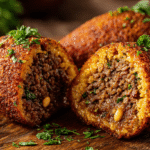
Crispy Middle Eastern kibbeh featuring fine bulgur wheat shells stuffed with spiced ground beef and toasted pine nuts. Deep-fried to golden perfection, these savory delicacies are served with tahini sauce or Greek yogurt.
- Prep Time: 30 minutes
- Cook Time: 40 minutes
- Total Time: 2 hours 10 minutes
- Yield: 24 kibbeh
- Category: Main Course
- Method: Deep Frying
- Cuisine: Middle Eastern
Ingredients
For the Kibbeh Shell: 2 1/2 cups fine bulgur wheat Water for soaking 1 large onion, quartered 1 1/2 lb lean ground beef or lamb 2 tsp ground allspice 1 tsp ground coriander 1/2 tsp ground cinnamon 1 tsp black pepper Pinch of salt Oil for frying For the Meat Filling: 1 tbsp olive oil 1 medium yellow onion, finely chopped or grated 1 lb ground lamb or beef, cold 1/3 cup toasted pine nuts 1 tsp ground allspice 1/2 tsp ground cinnamon Pinch of salt and pepper
Instructions
1. Cover a fine mesh strainer with a light cloth. Add bulgur wheat, place in a bowl of water, and soak for 15 minutes. Squeeze out all water thoroughly and set aside. In a food processor, combine quartered onion, 1 1/2 lb ground beef, 2 tsp allspice, 1 tsp coriander, 1/2 tsp cinnamon, 1 tsp black pepper, and pinch of salt. Process until very finely ground into a paste. Transfer to a large bowl, add bulgur, and knead with damp hands until combined. Cover and refrigerate. Heat 1 tbsp olive oil in a frying pan. Sauté chopped onion until golden, then add 1 lb ground beef. Cook until fully browned. Stir in pine nuts, 1 tsp allspice, 1/2 tsp cinnamon, salt, and pepper. Remove from heat and let cool completely. Remove kibbeh dough from fridge. Prepare a bowl of water and line a baking sheet with parchment paper. With damp hands, take 2 tbsp of kibbeh dough and form into an oval disc. Create a well in the center and hollow it out. Add 1 tbsp of filling, seal the top, and shape into an oval. Place on baking sheet. Repeat with remaining dough and filling, keeping hands damp throughout. Chill stuffed kibbeh for 1 hour. Heat oil in a deep frying pan to 350°F. Deep-fry kibbeh in batches without crowding for about 5 minutes until golden brown. Remove with slotted spoon to paper towel-lined pan. Repeat with remaining kibbeh. Serve hot or at room temperature with tahini sauce, tzatziki, or plain Greek yogurt.
Notes
Keep meat cold throughout preparation for best texture. Chilling the stuffed kibbeh before frying is essential to prevent them from falling apart. Fine bulgur wheat is crucial coarse bulgur won’t work for the shell. Kibbeh can be frozen before frying for up to 3 months. Fry directly from frozen. For a healthier option, bake at 400°F for 25-30 minutes or air fry at 375°F for 15-18 minutes. Maintain oil temperature at 350°F for optimal crispiness without greasiness.