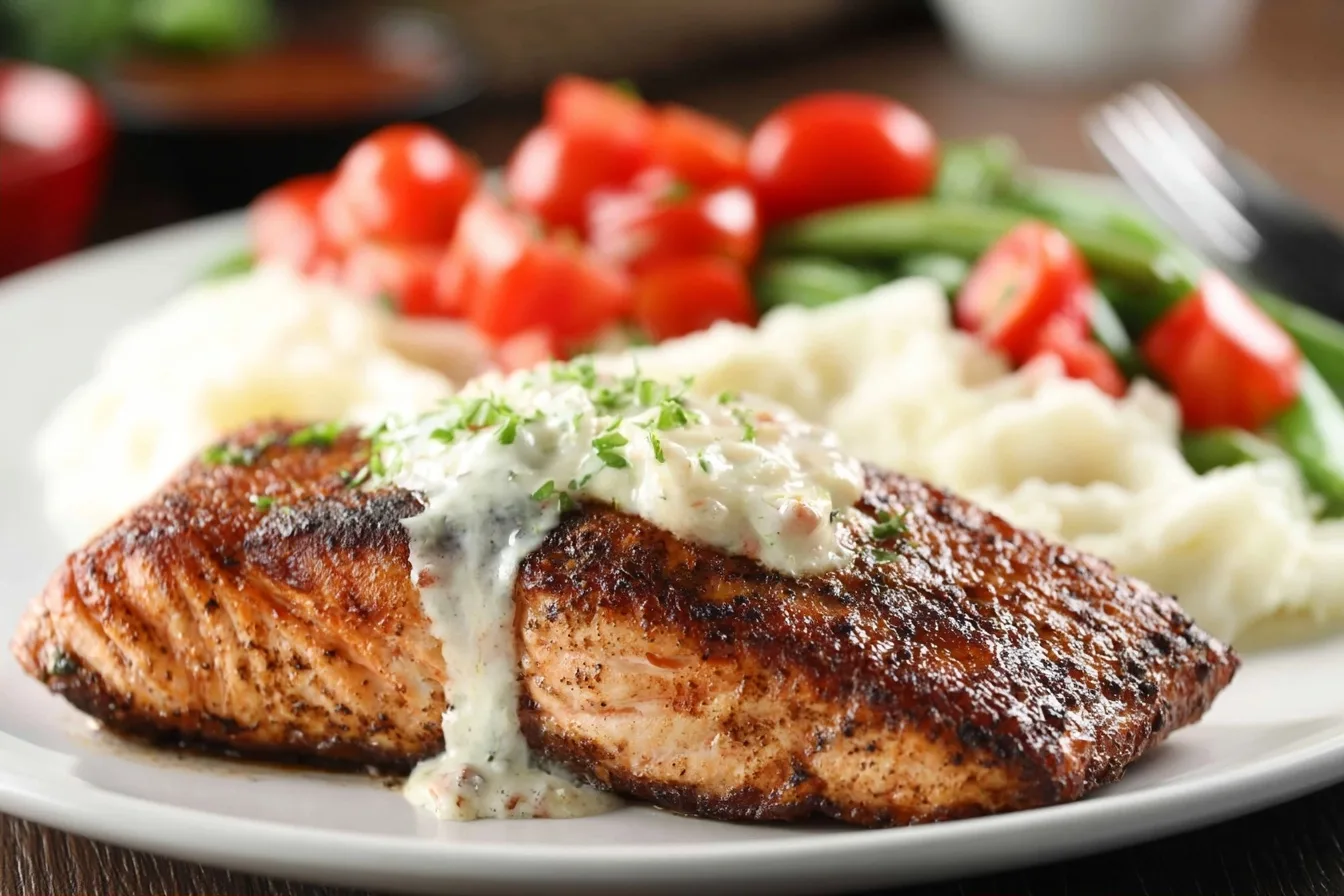
Texas Roadhouse salmon is a beloved restaurant staple known for its perfectly crisp skin, flaky texture, and rich, garlicky butter finish. Recreating this restaurant-quality dish at home is surprisingly straightforward when you use the right technique and heat control. By focusing on a hot sear and a final butter basting step, you can achieve that signature restaurant flavor in your own kitchen using simple, fresh ingredients that highlight the natural quality of the fish.
Recipe Overview
| Prep Time | Cook Time | Total Time | Servings | Difficulty | Cuisine | Category | Calories |
|---|---|---|---|---|---|---|---|
| 10 min | 8 min | 18 min | 4 | Easy | American | Dinner | 350 kcal |
Why This Recipe Works
This recipe works because it relies on the high-heat searing method favored by professional chefs to create a contrast between the crispy skin and the tender, buttery interior. By using a cast-iron skillet, you ensure even heat distribution that helps the salmon develop a golden-brown crust without overcooking the delicate flesh inside.
The combination of fresh minced garlic, high-quality butter, and bright lemon juice creates a basting liquid that elevates the salmon from simple grilled fish to a decadent meal. This preparation is ideal for busy weeknights when you want a nutritious protein that tastes like it came from a premium steakhouse kitchen.
Ingredients
| Ingredient | Quantity | Purpose | Substitutions |
|---|---|---|---|
| Salmon fillets | 4 (4 oz) | Protein | Steelhead trout |
| Salt | 1/2 tsp | Seasoning | Kosher salt |
| Black pepper | 1/2 tsp | Seasoning | White pepper |
| Garlic powder | 1/2 tsp | Aromatic | Onion powder |
| Lemon | 1 whole | Zest/Juice | Lime for acidity |
| Olive oil | 1 tbsp | Searing | Avocado oil |
| Garlic | 3 cloves | Flavoring | Garlic paste |
| Butter | 4 tbsp | Basting | Ghee |
Step-by-Step Instructions
Preparation and Seasoning
- Rinse each salmon fillet thoroughly under cold water.
- Pat the salmon completely dry using clean paper towels to ensure a good sear.
- Combine the salt, pepper, garlic powder, and the zest of one lemon in a small bowl.
- Rub the flesh side of each salmon fillet evenly with the spice mixture.
Searing and Basting
- Heat a large cast-iron skillet over medium-high heat with one tablespoon of olive oil.
- Place salmon in the hot skillet, skin side down, and cook undisturbed for 3 to 4 minutes.
- Flip the salmon using a fish spatula once the skin is golden and crispy.
- Cook for an additional 2 to 3 minutes on the flesh side.
- Add butter, minced garlic, and fresh juice from half a lemon to the skillet.
- Spoon the melting garlic butter continuously over the fillets for the final 2 minutes.
- Verify the internal temperature of the salmon reaches approximately 125 degrees Fahrenheit.
- Remove the salmon from the heat and garnish immediately with a fresh lemon wedge.
Chef Tips for Perfect Results
- Always dry the fish thoroughly; moisture is the enemy of a golden-brown sear.
- Use a cast-iron skillet for superior heat retention, which provides a professional-style crust.
- Let the salmon sit in the pan undisturbed while searing to allow the crust to form properly.
- Use an instant-read thermometer to avoid overcooking, aiming for 125 degrees for a moist center.
- Baste the salmon at the very end to ensure the garlic remains fragrant rather than burnt.
Common Mistakes to Avoid
- Not drying the fish: Wet salmon will steam rather than sear, leading to a soggy texture.
- Flipping too early: If the salmon sticks to the pan, it has not developed a crust yet; wait another minute.
- Skipping the thermometer: Salmon color can be deceptive, so digital temperature checks ensure consistent results every time.
- Burning the garlic: Ensure the heat is adjusted to medium when adding aromatics to prevent bitterness.
Variations and Substitutions
| Ingredient | Substitution | Flavor Impact | Best Use |
|---|---|---|---|
| Lemon juice | Orange juice | Sweeter, floral notes | Pacific salmon |
| Olive oil | Ghee | Nutty, rich flavor | High-heat searing |
| Garlic powder | Smoked paprika | Smoky depth | Outdoor grilling |
Serving Suggestions and Pairings
Serve this dish alongside classic sides like creamy mashed potatoes or steamed green beans to mimic the steakhouse experience. You can also pair it with a light side salad or roasted asparagus for a lower-carb option. For a refreshing beverage, a sparkling lemonade or a crisp iced tea provides the perfect acidity to cut through the richness of the garlic butter.
Storage and Reheating
| Method | Duration | Instructions | Best Result |
|---|---|---|---|
| Fridge | 2 days | Airtight container | Cold flakes for salad |
| Reheating | N/A | Low oven | Gently warm to prevent drying |
Nutritional Information
| Nutrient | Amount per Serving |
|---|---|
| Calories | 350 kcal |
| Protein | 28g |
| Fat | 22g |
| Carbohydrates | 2g |
Note: These values are approximate estimates based on standard preparation methods.
Frequently Asked Questions
Can I use frozen salmon for this recipe?
Yes, you can use frozen salmon provided it is fully thawed and pat-dried before seasoning. Make sure to drain excess water from the fillets so the seasoning adheres properly during the searing process.
How do I know when the salmon is fully cooked?
The best way to determine doneness is by using an instant-read digital thermometer inserted into the thickest part. Aim for an internal temperature of 125 degrees Fahrenheit for a moist, tender, medium-rare finish that flakes perfectly with a fork.
Why is my skin not crispy?
Crispy skin usually requires a very hot, dry surface and enough fat in the pan. Ensure your skillet is hot before adding the fish and avoid moving the fillets during the first stage of cooking to allow the skin to crisp fully.
Can I make this dairy-free?
You can substitute the butter with a high-quality dairy-free butter alternative or simply use olive oil mixed with a splash of water for the basting process. While the flavor will change slightly, the technique remains just as effective.
What should I do if the garlic burns?
If the garlic appears to be browning too quickly during the basting phase, lower the temperature of your stove immediately. Always wait until the salmon is nearly finished before adding garlic to the butter to ensure it remains aromatic and sweet.
Creating this Texas Roadhouse salmon at home allows you to enjoy a flavorful, healthy meal without the wait. By mastering the sear and the butter-baste technique, you turn simple ingredients into a restaurant-quality dinner. Serve it hot, keep the lemon fresh, and enjoy the perfect, flaky bite every time.
PrintTexas Roadhouse Salmon Copycat
Recreate the famous steakhouse experience at home with this perfectly seared salmon dish. Using a high-heat cast-iron method, this recipe achieves a wonderfully crisp skin and a tender, flaky interior. Finished with a decadent garlic and lemon-infused butter baste, this protein-rich meal delivers restaurant-quality flavor in under 20 minutes, making it a perfect choice for an elegant yet easy dinner.
- Prep Time: 10
- Cook Time: 8
- Total Time: 18
- Yield: 4 servings
- Category: Dinner
- Method: Sear and Baste
- Cuisine: American
- Diet: Pescatarian
Ingredients
4 (4 oz) salmon fillets
1/2 tsp salt
1/2 tsp black pepper
1/2 tsp garlic powder
1 whole lemon (zest and juice)
1 tbsp olive oil
3 cloves garlic, minced
4 tbsp butter
Instructions
Rinse each salmon fillet under cold water and pat completely dry with paper towels.
Combine salt, pepper, garlic powder, and the lemon zest in a small bowl.
Rub the flesh side of each salmon fillet evenly with the spice mixture.
Heat a large cast-iron skillet over medium-high heat with olive oil.
Place salmon in the hot skillet, skin side down, and cook for 3 to 4 minutes without moving it to ensure a crispy crust.
Flip the salmon carefully and add the butter and minced garlic to the pan.
Spoon the melting, garlic-infused butter over the fillets continuously for another 3 to 4 minutes until cooked through.
Finish with a squeeze of fresh lemon juice before serving.
Notes
Ensure the salmon is very dry before seasoning to get the best sear. Use a high smoke-point fat if you prefer not to use olive oil, such as avocado oil. Ghee is an excellent butter substitute if you prefer a higher smoke point during the basting process.