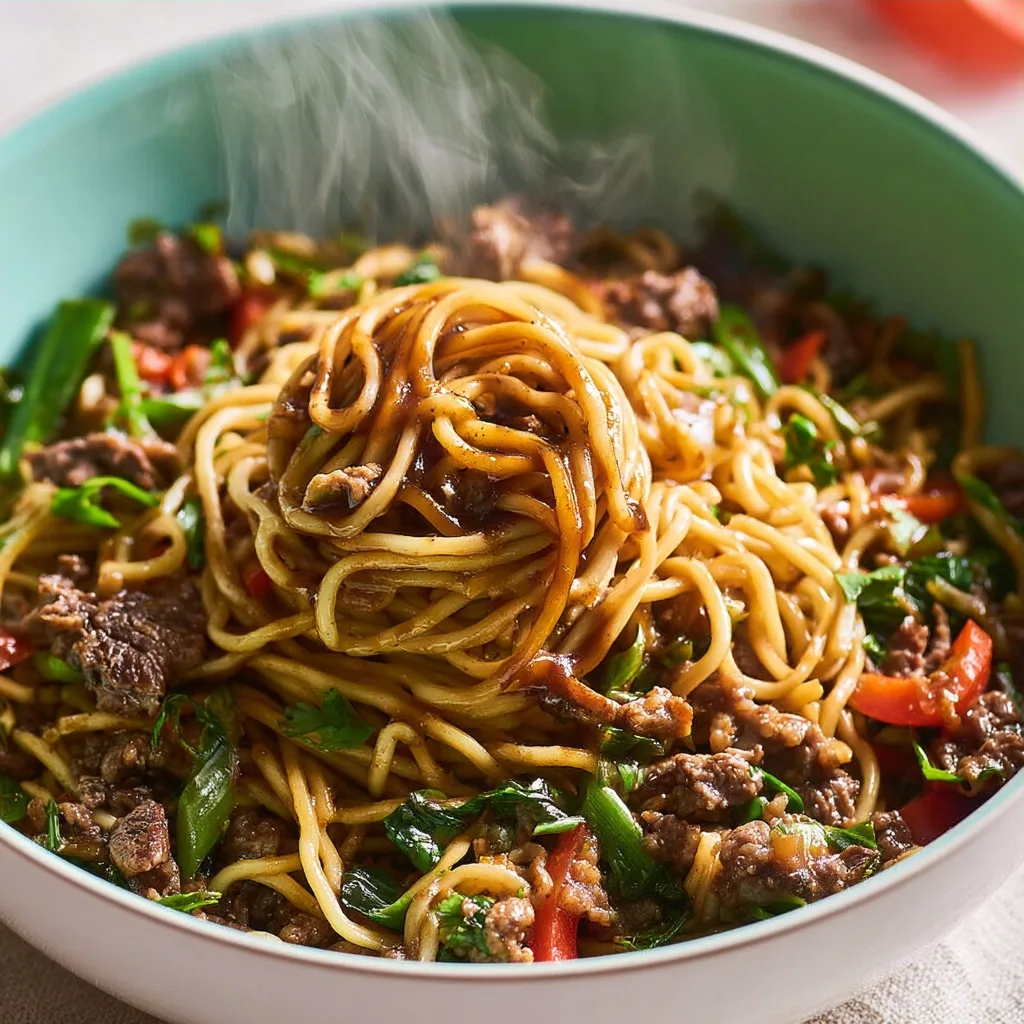
Mongolian Beef Noodles offer a savory, high-protein meal that combines the bold flavors of a classic stir-fry with the satisfying texture of Italian spaghetti. This version uses lean ground beef and high-protein noodles to create a nutrient-dense dinner that comes together in less than thirty minutes. By utilizing modern pantry staples like hoisin and low-sodium soy sauce, you can achieve a restaurant-quality glaze without spending hours over a stove. It is the perfect solution for busy weeknights when you need a filling, delicious meal for the whole family.
Recipe Overview
| Prep Time | Cook Time | Total Time | Servings | Difficulty | Cuisine | Category | Calories |
|---|---|---|---|---|---|---|---|
| 10 Mins | 15 Mins | 25 Mins | 4 | Easy | Asian-American | Main Course | 540 kcal |
Why This Recipe Works
This recipe balances convenience with complex flavors by utilizing ground beef, which browns faster and more evenly than traditional flank steak slices. Using a high-protein spaghetti variety increases the satiety of the dish while maintaining a familiar texture that kids and adults both enjoy. The combination of fresh aromatics like ginger and garlic provides a vibrant foundation that cuts through the richness of the savory hoisin-based sauce.
I have designed this method to be efficient by syncing the pasta boiling time with the meat browning process. The starch-rich pasta water serves as a vital thickening agent, ensuring the sauce clings to every strand of noodle rather than pooling at the bottom of the bowl. This approach eliminates the need for cornstarch slurries while providing a glossy, professional finish to the entire meal.
Ingredients
| Ingredient | Quantity | Purpose | Substitutions |
|---|---|---|---|
| High Protein Spaghetti | 1 Package (approx. 14oz) | Provides a filling base and muscle-building protein. | Chickpea pasta or whole wheat noodles. |
| Ground Beef | 1 lb | The primary protein source and flavor base. | Ground turkey or high-fat ground lamb. |
| Green Onions | 4 stalks | Adds fresh bite and visual contrast. | Chives or very thinly sliced leeks. |
| Garlic | 5 cloves | Delivers a deep, pungent aromatic base. | 1 tsp garlic powder in a pinch. |
| Fresh Ginger | 2 inches, minced | Adds a warm, spicy zing to the sauce. | 1/2 tsp ground ginger. |
| Red Pepper | 1/2 pepper | Provides sweetness and a slight crunch. | Carrot matchsticks or snap peas. |
| Low Sodium Soy Sauce | 1/2 Cup | The main source of salt and umami. | Tamari for a gluten-free option. |
| Hoisin Sauce | 2/3 Cup | Adds sweetness and thickens the glaze. | Sugar-free BBQ sauce with a dash of honey. |
| Pasta Water | 1 Cup | Binds the sauce to the pasta smoothly. | Beef stock if pasta water is unavailable. |
| Red Pepper Flakes | 1/4 tsp | Provides a subtle background heat. | Sriracha or red chili paste. |
Step-by-Step Instructions
Prepare the Base
- Boil a large pot of salted water vigorously on the stovetop.
- Cook the high protein spaghetti according to the package instructions until al dente.
- Reserve exactly 1 cup of the starchy pasta water before draining the noodles.
Cook the Protein and Aromatics
- Heat a large heavy-bottomed skillet over medium-high heat until hot.
- Add the ground beef and cook until thoroughly browned, breaking it into small crumbles.
- Toss in the minced garlic, ginger, and diced red pepper to the skillet.
- Sauté the mixture for 2 to 3 minutes until the vegetables soften and become fragrant.
Simmer and Toss
- Pour the low sodium soy sauce and hoisin sauce directly into the pan.
- Stir the meat and sauce together and bring the liquid to a gentle simmer.
- Add the reserved pasta water and red pepper flakes to reach the desired consistency.
- Simmer for 3 minutes to allow the flavors to meld and the sauce to thicken slightly.
- Transfer the cooked noodles into the skillet and toss vigorously until fully coated.
- Add a small splash of extra water if the noodles appear too dry.
- Fold in the sliced green onions just before removing the pan from the heat.
- Plate the dish in large bowls and garnish with extra green onions for serving.
Chef Tips for Perfect Results
- Always use a high-heat oil like avocado or grapeseed if you find your beef sticking, though the fat content in the meat usually suffices.
- Grate your ginger using a microplane instead of chopping it to ensure the flavor is evenly distributed through the sauce.
- Avoid overcooking the noodles in the initial boiling stage because they will continue to soften once added to the hot sauce.
- Ensure your pan is wide enough; a cramped skillet will steam the beef instead of browning it, leading to a loss of flavor.
- Let the ground beef sit undisturbed for 2 minutes when first hitting the pan to develop a deeply caramelized crust.
Common Mistakes to Avoid
Discarding the pasta water is the most frequent error, as this liquid contains the starch necessary to emulsify the sauce. Without it, the hoisin and soy sauce may separate or slide off the noodles rather than clinging to them. Using regular soy sauce instead of low-sodium can result in an overly salty dish that masks the nuances of the ginger and garlic. To fix an oversalted sauce, add a tablespoon of brown sugar or a squeeze of fresh lime juice to balance the profile. Finally, do not overcrowd the aromatics; if the garlic burns, it will impart a bitter taste to the entire recipe.
Variations and Substitutions
| Ingredient | Substitution | Flavor Impact | Best Use |
|---|---|---|---|
| Spaghetti | Rice Noodles | Lighter, smoother texture. | Gluten-free diets. |
| Ground Beef | Ground Chicken | Milder, leaner profile. | Low-calorie prep. |
| Red Pepper | Broccoli Florets | Earthier, crunchier bite. | Adding more fiber. |
Serving Suggestions and Pairings
To complement the sweet and savory profile of the Mongolian beef, serve this dish alongside a crisp cucumber salad dressed in rice vinegar and sesame oil. For a more substantial feast, pair the noodles with steamed bok choy or roasted snap peas seasoned with toasted sesame seeds. If you enjoy a bit of contrast, a cold sparkling water with lime or a hot jasmine tea helps cleanse the palate between bites. These noodles are ideal for casual family dinners but are impressive enough for hosting friends who enjoy bold, international flavors.
Storage and Reheating
| Method | Duration | Instructions | Best Result |
|---|---|---|---|
| Refrigerator | 3-4 Days | Store in an airtight container once cooled. | Excellent flavor development. |
| Freezer | 2 Months | Freeze in individual portions for easy meal prep. | May require extra sauce after thawing. |
| Microwave | 2 Mins | Add a teaspoon of water and cover before heating. | Quick and convenient. |
Nutritional Information
| Nutrient | Amount per Serving |
|---|---|
| Calories | 540 kcal |
| Protein | 38g |
| Total Fat | 14g |
| Carbohydrates | 62g |
| Sodium | 1120mg |
Note: Approximate values based on standard ingredients and high-protein pasta brands.
Frequently Asked Questions
Can I use a different type of noodle?
Yes, you can substitute the high-protein spaghetti with fettuccine, udon, or even rice noodles if you prefer a different mouthfeel. Just ensure you adjust the boiling time according to the specific noodle package instructions to avoid a mushy result.
How do I make this dish spicier?
You can increase the red pepper flakes to one full teaspoon or add a tablespoon of sriracha sauce directly into the glaze while it simmers. Adding thinly sliced fresh chili peppers at the very end will also provide a sharp, immediate heat.
Can I prepare this recipe in advance for meal prep?
This recipe is perfect for meal prep because the noodles hold up well and the sauce flavors deepen over several days in the fridge. When reheating, simply add a splash of water or broth to loosen the sauce and restore the original glossy texture.
What if I cannot find high-protein pasta?
Standard spaghetti works perfectly well in this recipe and will not affect the cooking process or the final flavor profile. You can also look for whole-grain versions if you want to maintain a higher nutritional value without the specific high-protein label.
How can I make the beef extra crispy?
To achieve crispier beef, drain the excess fat after browning and let the meat sear on one side for several minutes without stirring. This allows the sugars in the meat to caramelize, creating those desirable charred bits often found in high-end stir-fries.
Conclusion
Mastering Mongolian Beef Noodles is a game-changer for anyone looking to eat healthy, high-protein meals without spending hours in the kitchen. By combining simple pantry staples with fresh aromatics, you can create a dish that rivals any takeout option in both nutrition and taste. This recipe provides the perfect balance of savory umami and subtle sweetness that defines the best of Asian-American fusion. Once you experience how the glossy sauce clings to the protein-rich noodles, this will likely become a recurring star in your weekly dinner rotation. Enjoy the irresistible combination of zesty ginger and savory hoisin glaze tonight.
PrintMongolian Beef Noodles (High Protein & Fast)
A quick, high-protein Asian-American stir-fry blending ground beef with Italian noodles. Flavorful hoisin sauce and fresh aromatics create a family-friendly dish that’s easy to prepare in under 25 minutes.
- Prep Time: 10
- Cook Time: 15
- Total Time: 25
- Yield: 4 servings
- Category: Dinner
- Method: Stir-Frying
- Cuisine: Asian-American
- Diet: High Protein
Ingredients
High Protein Spaghetti, 1 package (approx. 14oz)
Ground Beef, 1 lb
Green Onions, 4 stalks
Garlic, 5 cloves
Fresh Ginger, 2 inches, minced
Red Pepper, 1/2 pepper
Hoisin Sauce, 1/4 cup
Low-Sodium Soy Sauce, 2 tablespoons
Sesame Oil, 1 tablespoon
Honey, 1 tablespoon
Instructions
Bring 4-5 cups of water to a boil. Add high protein spaghetti and cook until al dente (8-10 minutes). Reserve 1/2 cup of pasta water.
Heat sesame oil in a large skillet over medium-high heat. Brown the ground beef in batches, breaking into small pieces with a spatula.
Add minced garlic and ginger to the skillet; cook 1-2 minutes until aromatic. Stir in hoisin sauce, low-sodium soy sauce, red pepper slices, and honey.
Return cooked noodles to the skillet. Toss with sauce, adding reserved pasta water as needed to create a glossy, clinging glaze.
Top with chopped green onions and serve immediately.
Notes
Use hoisin sauce directly from the bottle for restaurant-level flavor. If unavailable, substitute with a mix of sweet soy glaze and miso paste.
Pasta water is essential for sauce emulsification – skip cornstarch to maintain clean ingredient profile.
Ground ginger can replace fresh at 1/2 tsp for 2 inches of fresh.